

On the surface, most trench covers look much the same, and it’s easy to assume they’ll perform the same too. We see that assumption a lot, and it’s exactly why we took two trench covers out for a real-world test.
Why we tested two trench covers that look alike
A trench cover has one job to do – it allows pedestrians and/or vehicles to move safely over an open excavation. However, if the wrong trench cover is used (or it’s weight capacity claims are misrepresented) the consequences can be serious for those relying on it to keep them safe.
The problem is that you can’t tell how a trench cover will perform just by looking at it. The materials, construction and quality can differ hugely between two products that seem almost identical. A weight rating stamped on a plate is nothing more than a claim, unless it has independent testing and certification to back it up.
To prove just how different two composite plates can be, we brought them out of the warehouse and put them to the test in a real-world scenario that’s hard to argue with.
What we tested
We tested two different composite trench covers side by side:
- LowPro 15/10 Safe Cover (1.5 m x 1.0 m), rated for a maximum load of 3.5 tonnes over a 900mm trench span
- Alternative Trench Cover (1.2 m x 800 mm), a lower-priced plate claiming a 500kg load rating over a 900mm trench span
Both were set up over a 900mm clear span to perform both a pedestrian weight test and a vehicle weight test (2.3T Ford Ranger ute).
One thing was evident right off the bat; because of its size, when places at a 900mm trench span, the Alternative Trench Cover had only about 150 mm of plate resting on each side of the span which wasn’t much to hang on to.
What happened
We started with a simple pedestrian test with both plates placed at a 900mm trench span. The LowPro stayed solid while the Alternative Trench Cover was already flexing noticeably under foot traffic, well within its claimed rating.
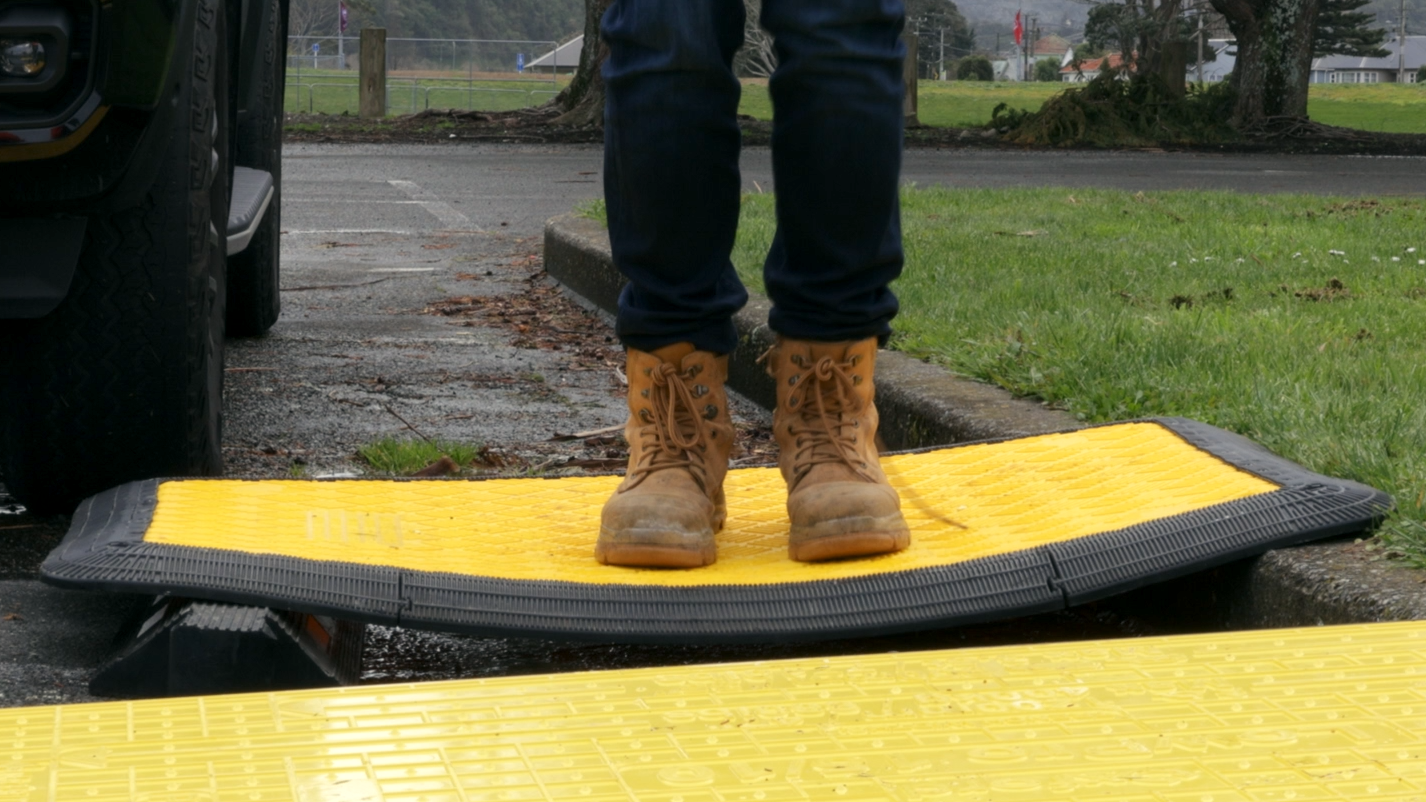
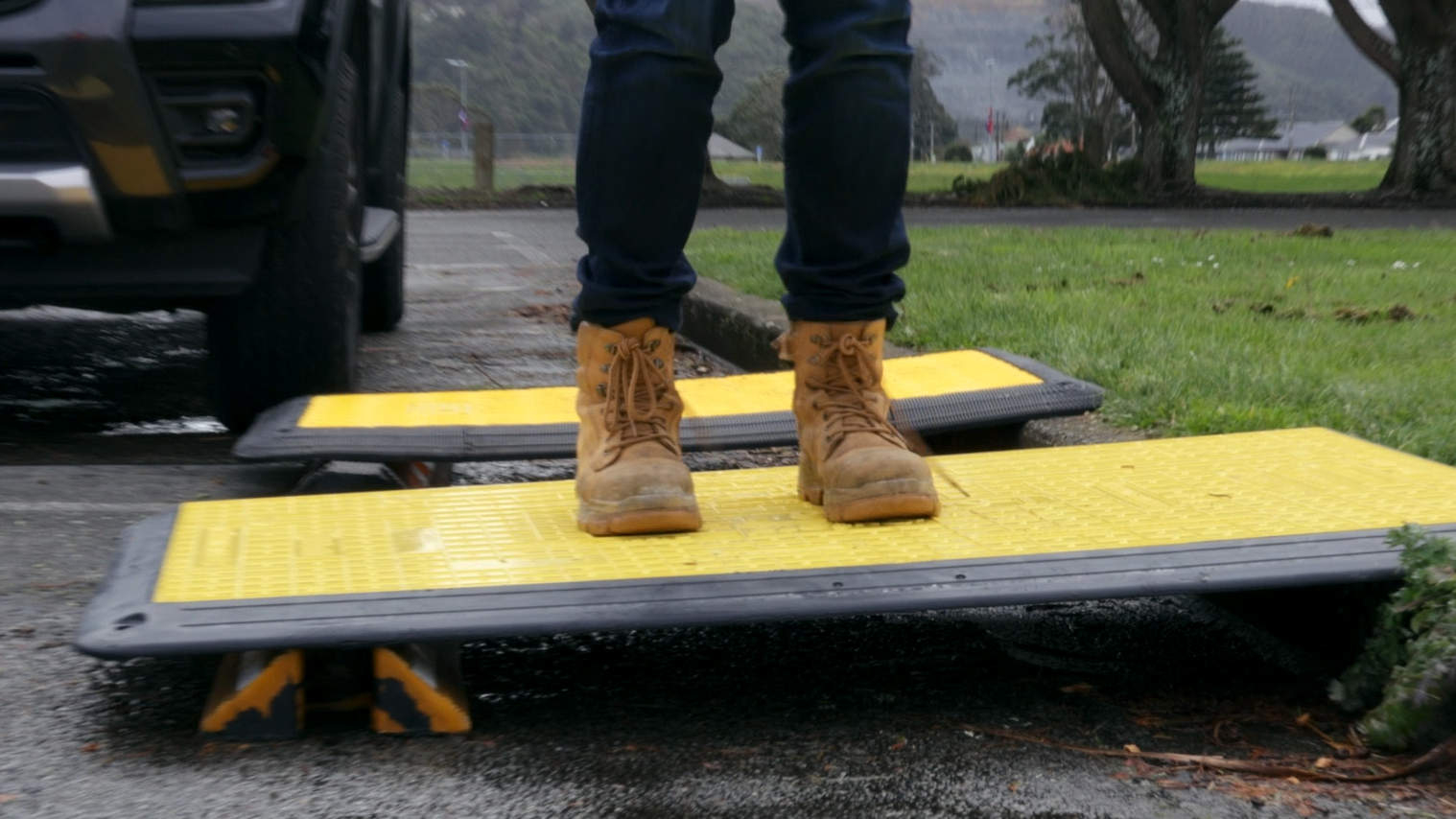
Images: Alternative Trench Cover (Left); LowPro 15/10 Safe Cover (Right).
Due to the noticeable flexing of the Alternative Trench Cover under pedestrian weight, to give it a fairer go (and the ute a safer landing), we brought its span in to 700 mm while keeping the LowPro at the full 900 mm.
We then drove the Ford Ranger over both plates. The LowPro took the weight without an issue. The alternative bent under the load, with some worrying cracking noises along the way.
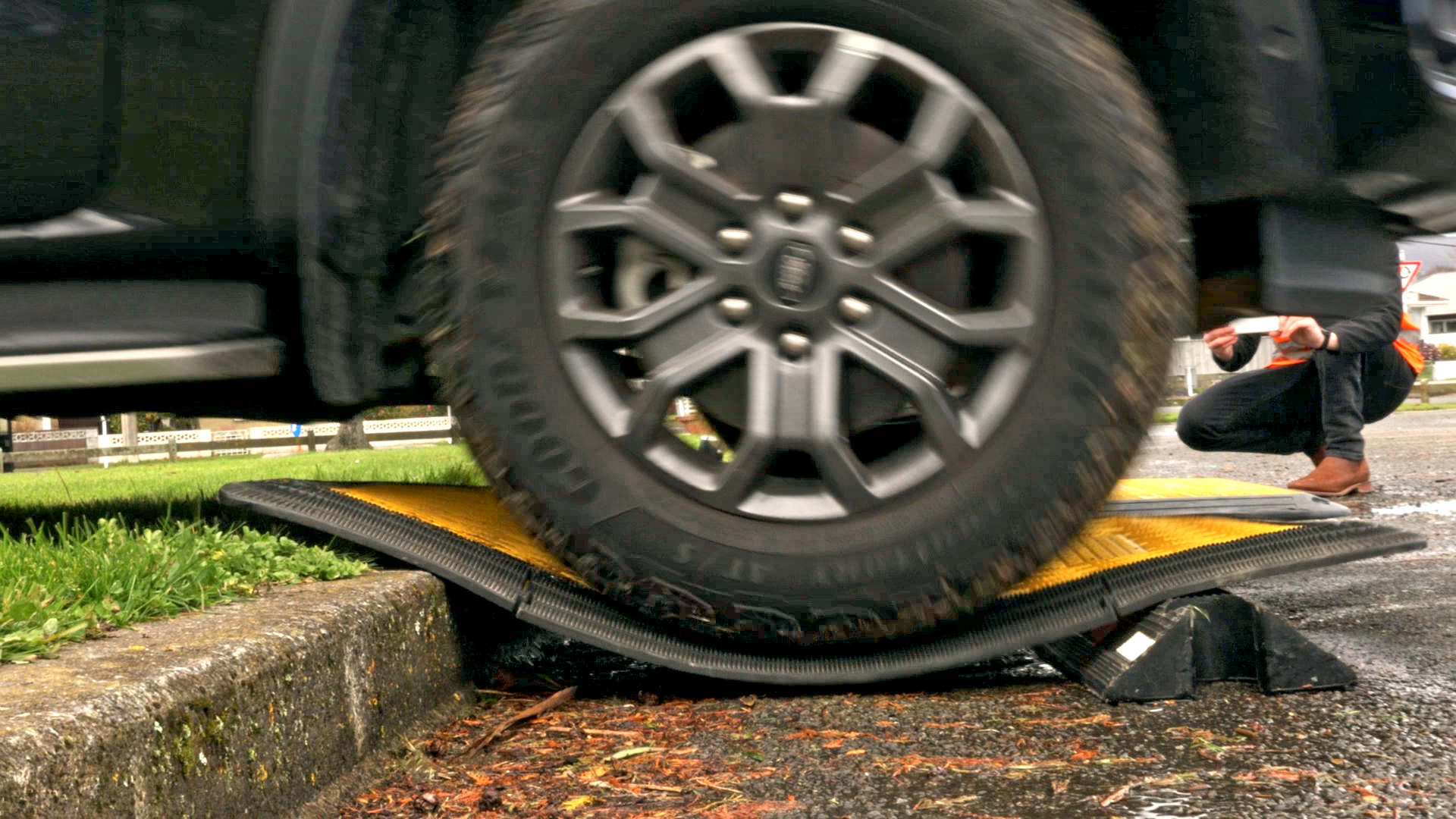
Image: Alternative Trench Cover at 700mm span.
Finally, we reset the Alternative Trench Cover to its claimed 900 mm span and drove over it again. The pictures speak for themselves.
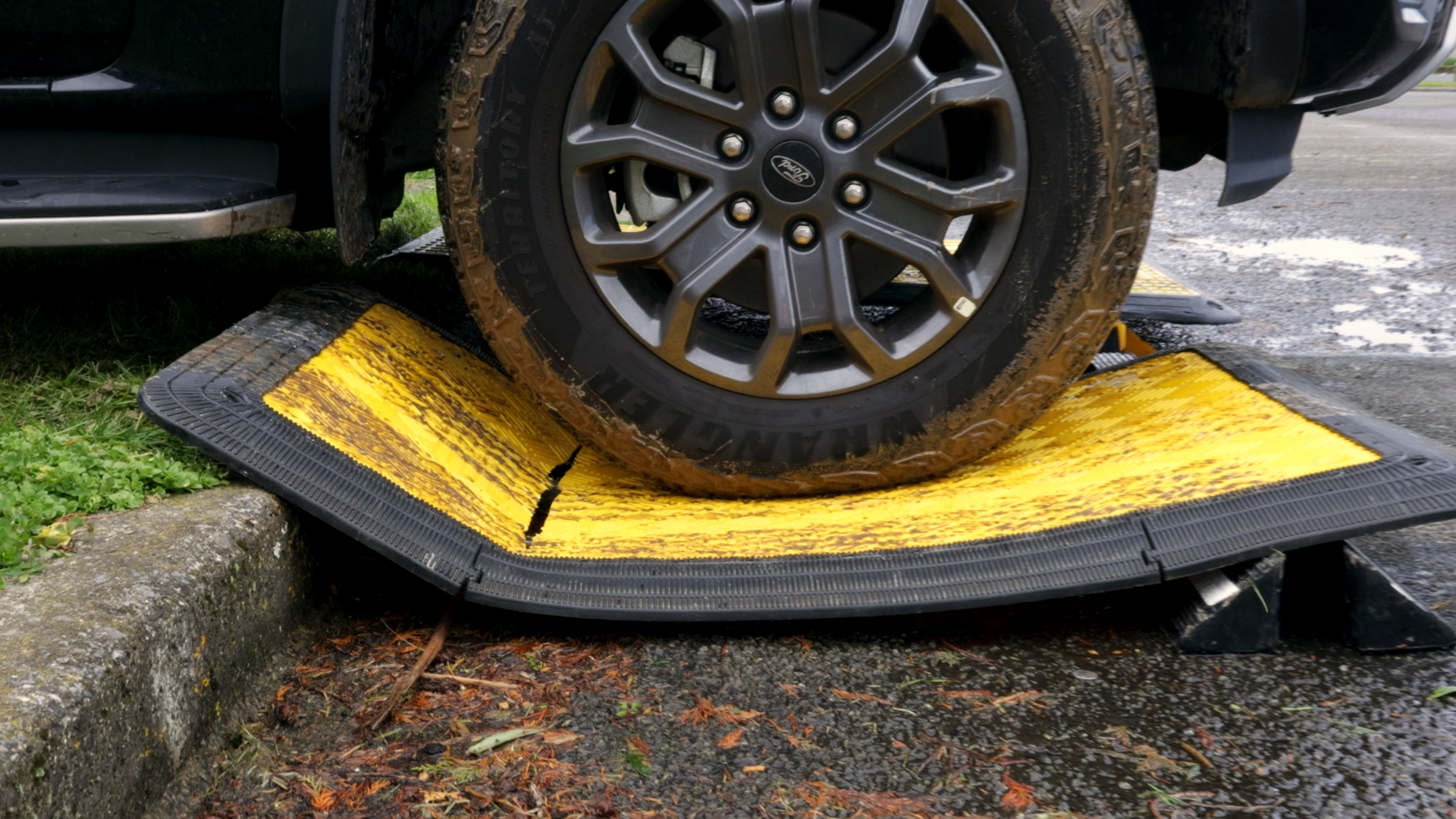
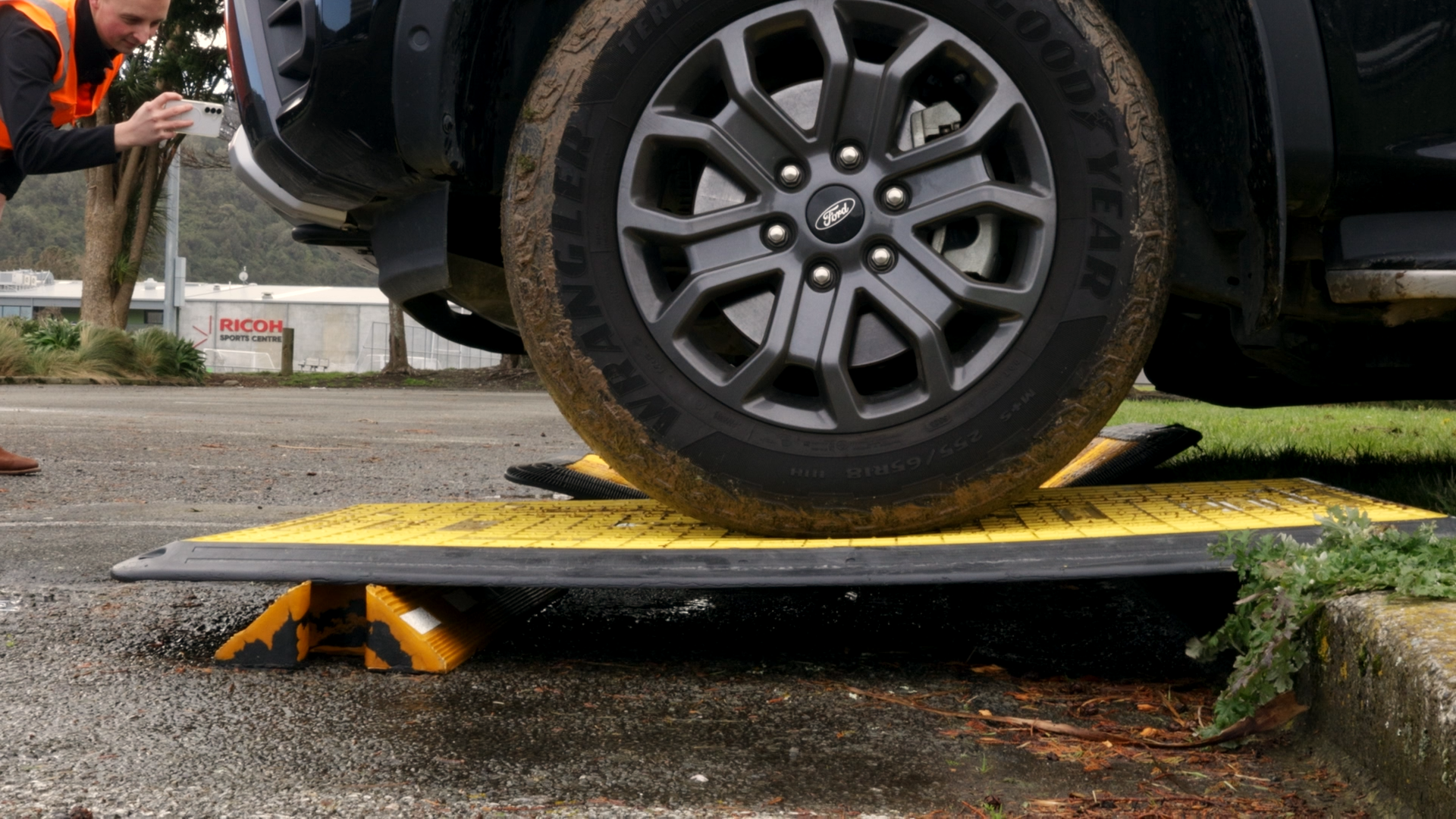
Image: Alternative Trench Cover at 900mm span (Left); LowPro 15/10 Trench Cover at 900mm span (Right).
Being upfront about the ratings
The Ford Ranger weighs 2.3 tonnes, which equates to a 575kg point load on each of its four wheels.
While this fits within the Alternative Trench Cover’s claimed rating for a 700mm trench span (600kg point load), admittedly this is beyond the Alternative Trench Cover’s rating for a 900mm trench span (500kg point load). We didn’t expect it to carry a ute, and we’re not suggesting it should have. But the point of the test is what it reveals.
Two trench covers that look the same performed very differently. One handled a 2.3T ute with zero defects, while the other flexed under a person and cracked under a vehicle. If you assume all yellow plates are created equal, you could easily end up with a trench cover ill-suited to your site conditions.
On a live site, you can’t always control what ends up crossing a trench, and the consequences of it failing could be serious.
What the LowPro 15/10’s certification actually means
The LowPro 15/10 Safe Cover has been independently tested and certified over a 900mm span to the Highway Authorities & Utilities Committee (HAUC) advice note 2018/01.
Its 3.5 tonne rating means it can take one wheel of a 3.5 tonne vehicle, which works out to an 875 kg point load. The HAUC advice note sets two performance requirements at that load:
- Deflection of no more than 5% of the span at an 875 kg working load
- An ultimate load greater than 1,750 kg
The LowPro passed both comfortably. At 875 kg it deflected just 1% of the span (9.0 mm), and its ultimate load was 4,800 kg, well over twice the requirement.
Furthermore, the manufacturer of the LowPro Trench Cover, Oxford Plastics, has a 2:1 weight capacity safety factor. This means LowPro trench covers are rigourously tested to support twice their maximum load capacity before experiencing structural failure.
- Double Capacity Testing: If a trench cover is rated to safely handle a specific weight limit (e.g., a 3.5T load), the product is structurally proven to withstand double that weight during testing (7T).
- Regulatory Compliance: This safety margin ensures these products meet industry standards, such as HAUC (Highway Authorities and Utilities Committee) guidelines for street and road works.
- Reliable Protection: The 2:1 safety factor ensures reliable, heavy-duty performance when replacing traditional, dangerous steel plates or wooden boards on active roadways and walkways.
That’s the difference between a rating that’s been printed on a product and one that’s been proven.
What to ask before choosing trench covers for your site
Being a bit sceptical is one of the best safety habits you can have. So, before you select a trench cover to go on your site, make sure you ask:
- Has the load rating been independently tested and certified? To what standard?
- What span was it tested over, and does that match your trench sizes?
- What will actually cross it: pedestrians, light vehicles, or heavier traffic?
- How much bearing does the plate have on each side of the trench?
Getting clear answers to these questions – with the addition of independent testing and certifications – means you can feel confident that your traffic safety equipment will perform as intended and keep your people and vehicles moving safely.
Getting the right trench cover for the job
Watch the full test in the video above to see how the two plates compared.
Take a closer look at the LowPro 15/10 Safe Cover, or get in touch with our team if you’d like advice on choosing the right trench covers for your site.
