

Client: Wellington Transport Alliance
Interviewee: Kim Buchanan — Contracts Engineer
The Wellington Transport Alliance (WTA) maintains and operates the state highway network and assets in the Greater Wellington region. They handle road repairs, resurfacing, and incident response, including on Transmission Gully.
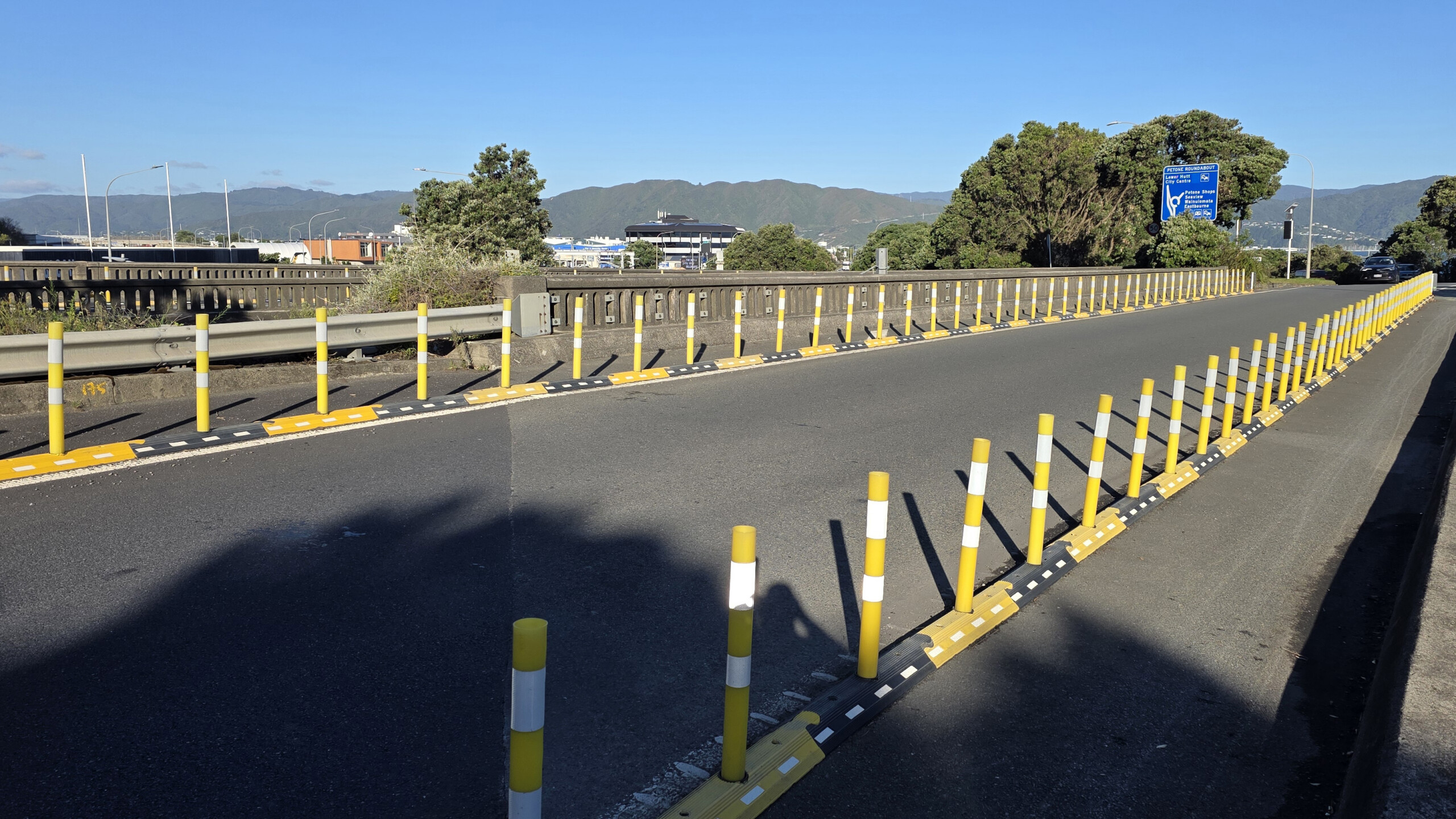
For traffic delineation, WTA previously used standard traffic separators but recently changed to our ULTRAFLEX Separator System. Kim Buchanan explains why they made the switch and the benefits of using ULTRAFLEX on this Petone over-bridge project.
What has been your experience using delineators?
To be honest, the old delineators were a bit of a headache. They didn’t handle knocks well, especially in spots with tight geometry or heavy traffic. We were replacing them far too often, and once they started breaking, they became more of a hazard than a help. Maintenance crews were constantly going back to tidy things up.
How did Vanguard help during the research phase?
When we started looking for something better, Vanguard were good at actually listening to the issues we were dealing with. They showed us options, talked through what had changed from the older systems, and gave us enough detail to make a proper call. The real‑world examples and testing info helped us feel confident we weren’t just swapping one problem for another.
How did ULTRAFLEX perform on the Petone over-bridge project?
Since putting the new ULTRAFLEX system in on Petone over-bridge, it’s been performing solidly. It’s taken a few hits already and bounced back without needing us to rush out and replace anything. Visibility is good, the bases stay put, and overall it’s holding up well in a spot that’s not exactly gentle on infrastructure.
Was there a difference using delineators alone vs delineators in the rubber base?
There’s a noticeable difference. Standalone delineators tend to twist, loosen, or snap after repeated impacts. With the rubber base, the whole setup absorbs the hit better and stays aligned. From a maintenance point of view, it’s easier — fewer callouts, and when something does need attention, it’s a quick job. Performance and lifespan are both better with the base system.
What what you say to people unsure about durability?
I get the hesitation — the old versions didn’t do the industry any favours. But the new system is a big step up. We’ve already seen it take impacts that would’ve destroyed the previous ones. The design changes have clearly addressed the weak points. Based on what we’ve seen so far, the durability concerns don’t match the current product.
Any final comments?
Overall, it’s been a good upgrade. Less maintenance, better resilience, and a system that does what we need it to do in a tough environment. Vanguard have been easy to work with, and the product is proving itself on the ground.
