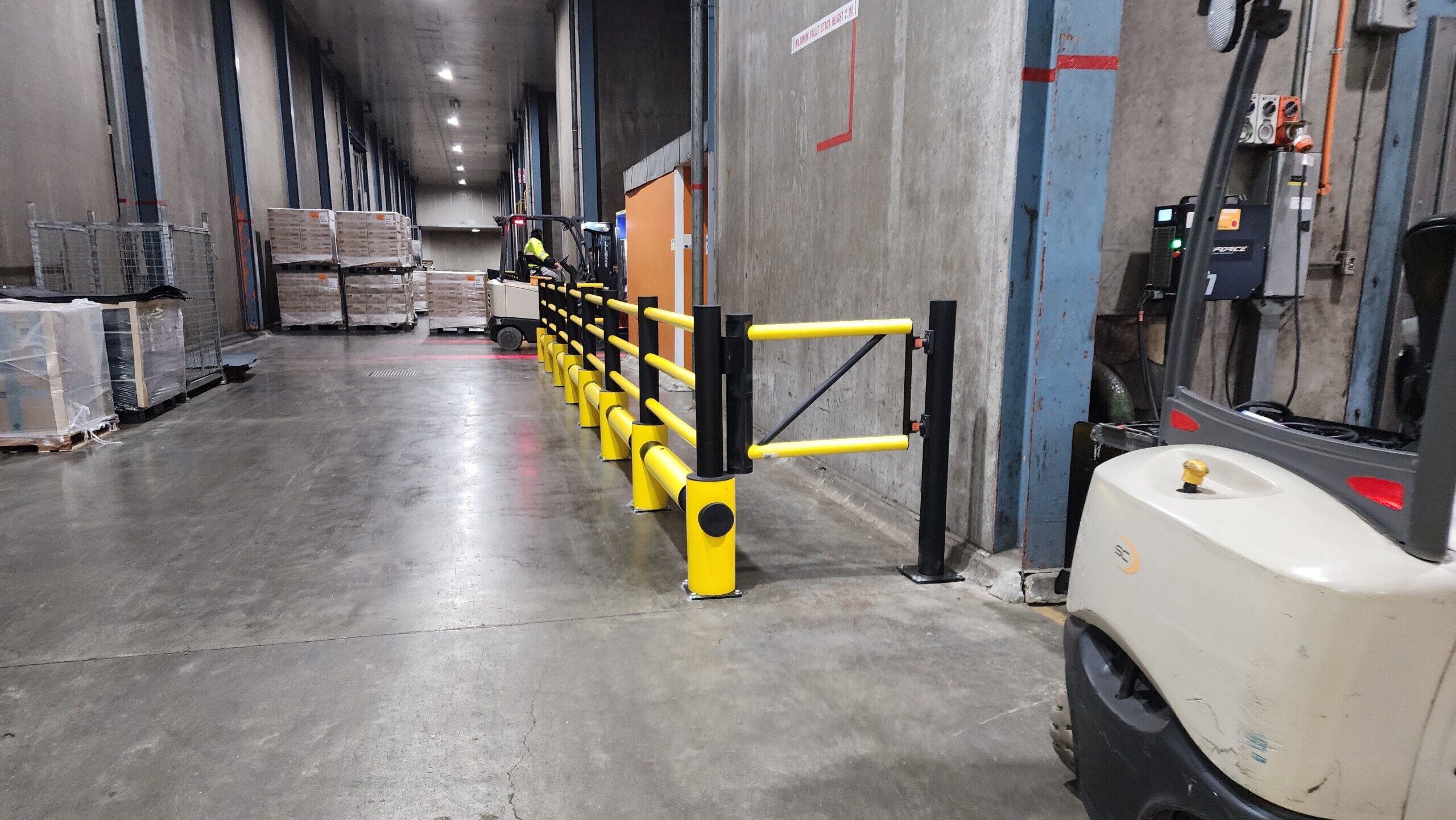
When exploring barrier options for workplaces, clients often ask if they can use the same W Beam barriers used on roads, in car parks, or outside facilities as they use in their warehouses, logistics centres, or plants.
They can be used in workplaces. However, the real question is, should they be? The answer is no, not if you want a forklift impact-rated barrier system that gives you the maximum amount of operational space.
Installing any old steel barrier without considering the unique needs of your workplace can result in wasted space and costly accidents that could have been prevented.
In this article, we’ll cover:
- Why Not All Barriers Are the Same
- Where W Beam Barriers Work Best
- ForkSafe vs W Beam Barriers: Key Differences (comparison table)
- Which Barrier Is Right for My Site?
Why Not All Barriers Are the Same
It’s essential to recognise that not every barrier is designed for the same purpose. A forklift barrier that protects staff in a warehouse faces very different demands than a roadside barrier that needs to stop a vehicle at speed.
Materials, design, and installation all change depending on what you’re trying to achieve, whether that’s managing pedestrian flow, protecting assets, or preventing serious collisions. The challenge comes when the wrong barrier is chosen for the wrong environment, which can create a false sense of security or even introduce new risks.
The question you should be asking yourself is not “Do we need a barrier?” but “What do we need this barrier to actually do?”. Being clear on that upfront helps you select the right type of barrier that does the job you’re counting on it for.
Where W Beam Barriers Work Best
A W Beam barrier is a heavy-duty steel barrier commonly used on roads or motorways where vehicles are travelling at speed, in carparks where heavy vehicles move through, and outside facilities where trucks are likely to be coming in and out of the area.

The Limits of W Beam Barriers in Workplaces
While W Beam barriers can be used in workplaces as a safety barrier, there are some key factors to consider when installing them in an area such as a warehouse or logistics centre.
W Beam Barrier Considerations:
- Bulky design: These barriers are up to 300mm in width and can take up unnecessary operational space due to their size.
- Impact testing: Armco is impact tested in compliance with the AS/NZS 1170.1, which is based on the physical impact of cars and other vehicles, not forklifts and other materials handling equipment (MHE).
The lack of impact testing against forklifts and other MHE makes the W Beam barrier unsuitable for workplaces, while the clunky design can take up valuable space.
ForkSafe Barriers: Save Operational Space and Reduce Maintenance Costs
ForkSafe™ Steel Barriers are a certified, modular steel barrier system designed to protect buildings, assets, and pedestrians from damage or injury caused by forklifts and other MHE. Due to its modular design, this barrier system is highly customisable, easy to install, and ideal for ongoing maintenance.
- Space-saving: ForkSafe barriers have a width of 90mm, which reduces the amount of operational space they occupy.
- Modular and easily modifiable: The highly customisable to meet your site-specific requirements
- Crumple Zone Technology (CZT): designed to absorb impact, reduce shock to forklifts or MHE, and protect your concrete floor from blowing out.
- PAS 13 Impact Tested: PAS13 is a testing method specifically designed to measure barrier strength and durability against forklift and other MHE impact in industrial environments — not just vehicles.
Related Article: “PAS 13 Steel Barrier Testing: What It Is and Why It Matters.”
ForkSafe vs W Beam Barriers: Key Differences
Identifying the differences between ForkSafe and W Beam Barriers will help you make an informed decision about which barrier is right for your site. We’ve put together a handy comparison table to show you the key differences at a glance.

Related Article: “The ForkSafe Barrier Range: A Comprehensive Overview.”
Which Barrier Is Right for My Site?
Deciding which barrier is right for your site depends on your specific situation and the objectives you’re trying to achieve. Before investing in a steel barrier, consider:
- What environment you’re installing into, e.g, a warehouse, carpark, plant, or road
- The types of vehicles travelling through the area, e.g trucks, cars, or forklifts
- The size of the space as a whole
- The volume of traffic moving through the area
- Where and when vehicles intersect with pedestrians
The safest barrier for your workplace isn’t decided by what’s most common, but by what your site actually needs. A warehouse with constant forklift traffic faces very different risks than a car park or state highway.
Before installing any barrier, step back and ask yourself the questions above. By matching the barrier to your environment — whether that’s Armco, ForkSafe, or another option — you avoid wasted spending, protect your people, and ensure the solution genuinely does the job you expect it to.
If you’re still unsure what safety barrier is right for your workplace or site, we’re here to help. We can discuss your situation and provide advice on the range of steel barrier options available to you. Get in touch with our team today!
Related Article: “How Much Do Steel Barriers Cost and Why Should I Invest?”