

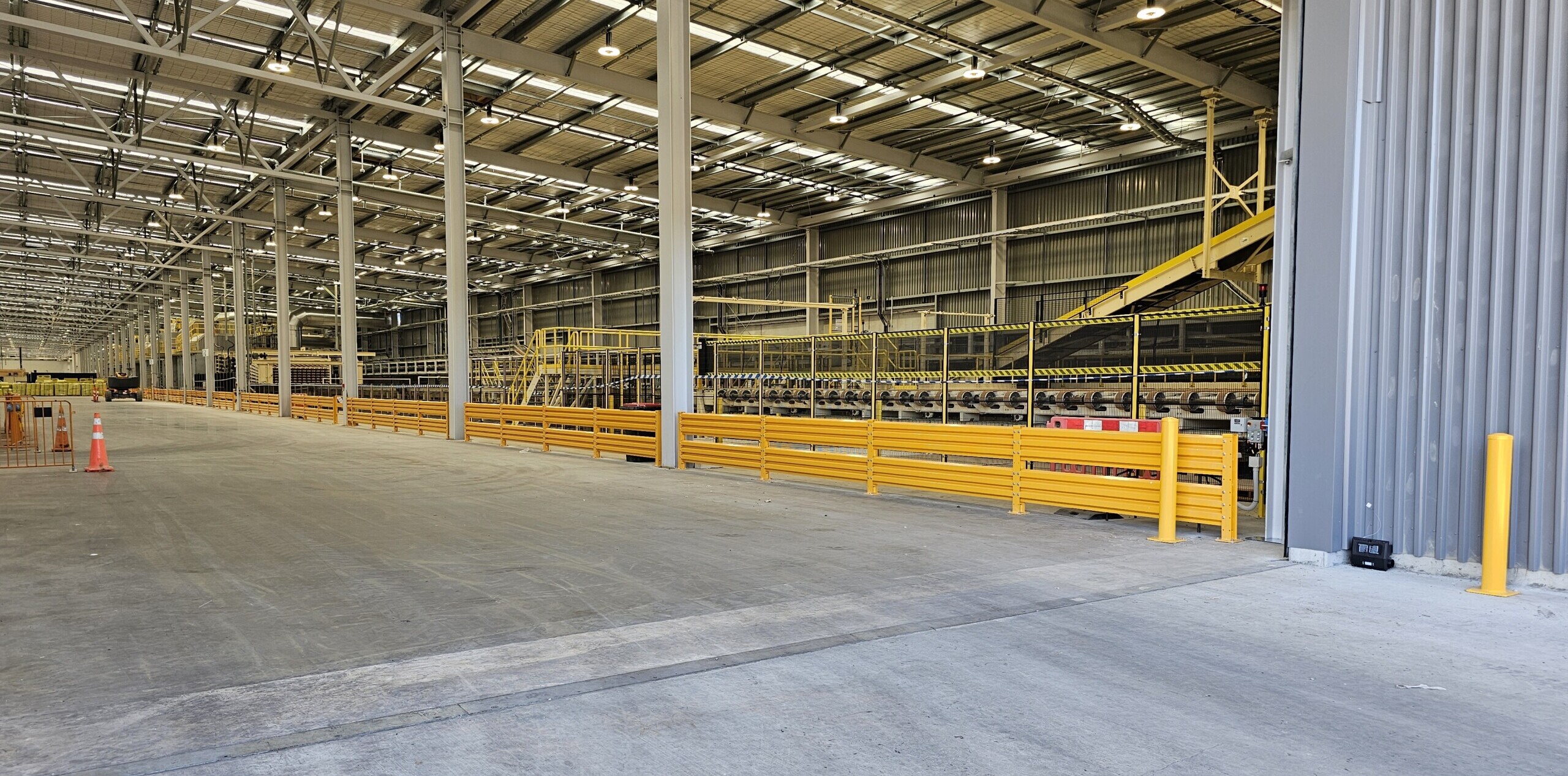
Keeping people safe in a workplace environment where pedestrians, forklifts, and other materials-handling equipment share the same space is a challenging and high-risk task.
Whether you’re operating a warehouse, food manufacturing facility or any other logistics centre, workplaces of this nature require fit-for-purpose safety solutions that protect buildings, assets and people.
One of these solutions is the ForkSafe™ Barrier Range, a PAS 13 impact-tested steel barrier system specifically designed to enhance safety and efficiency in busy areas where pedestrians, forklifts, and materials handling equipment (MHE) coexist.
In this article, we’ll explore:
- The benefits of ForkSafe Barriers
- The PAS 13 Impact Rating
- Types of barrier configurations
- ForkSafe Barrier cost
- Is ForkSafe suitable for your workplace?
What Are ForkSafe Barriers?
Our ForkSafe™ Steel Barriers are a certified, modular steel barrier system designed to protect buildings, assets, and personnel from damage or injury caused by forklifts and other MHE. Due to its modular design, this barrier system is highly customisable, easy to install, and ideal for ongoing maintenance.
Available in a range of configurations to suit your situation, all our ForkSafe barriers are manufactured from steel and galvanised with a powder-coated yellow finish. Manufactured in Vietnam for quality at a fair price, they’re also UV-resistant and come with a 10-year warranty for added peace of mind.
Watch Video: ForkSafe Barriers | Range Overview
Steel Barrier Impact Ratings: How Does ForkSafe Measure Up?
When investing in a steel barrier system, you want assurance that it will be able to withstand impacts in the environment where it is installed. The ForkSafe Barrier System is impact-tested in accordance with the PAS 13 code of practice.
Unlike other standard testing standards, such as Finite Element Analysis (FEA) or AS/NZ 1170, PAS13 is a testing method specifically designed to measure barrier strength and durability against forklift and other MHE impact in industrial environments—not just vehicles.
ForkSafe’s Crumple Zone Technology (CZT) is designed to absorb impact in such a way that reduces the chance of shock to the forklift or MHE and also protects your concrete floor from blowing out.
For example, our most commonly used ForkSafe system, 950-A configuration, is designed to protect walkways and withstand a 90-degree impact from a 5-ton machine travelling at 10 km/h.
Are There Different ForkSafe Barrier Configurations?
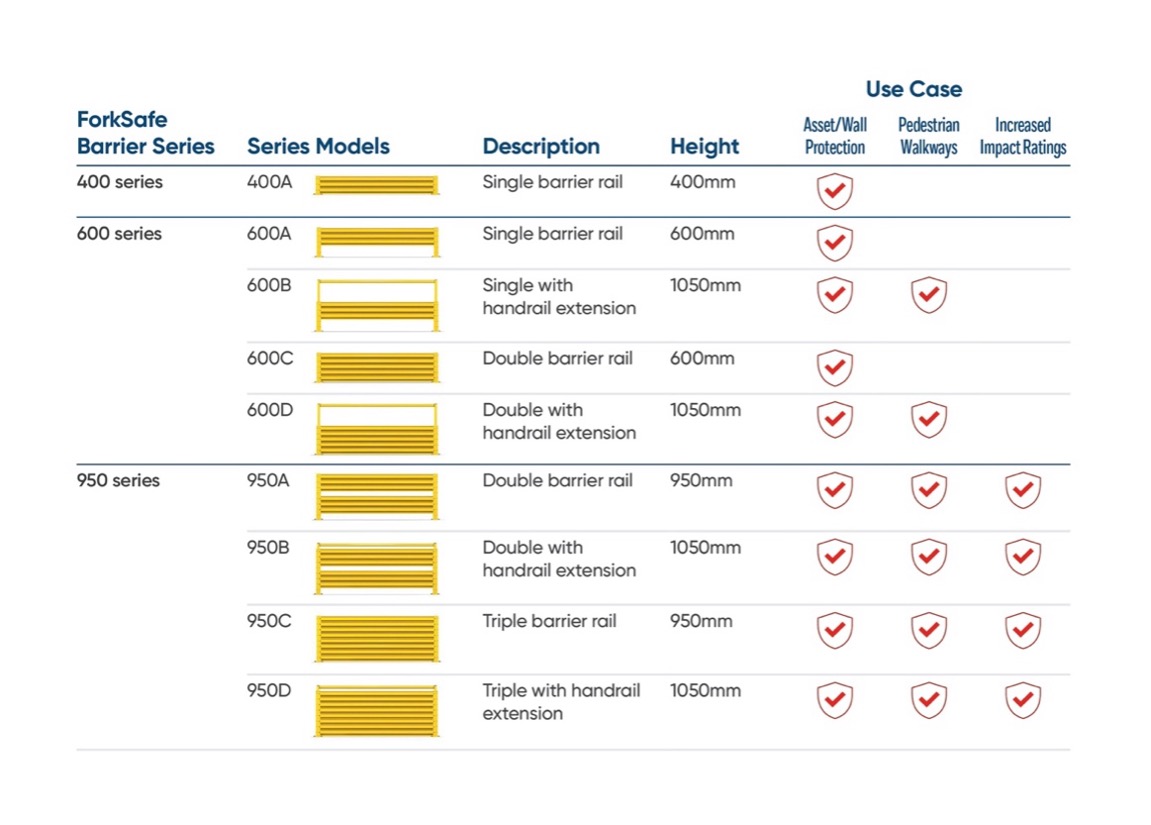
In the ForkSafe system, there are three main configurations — the 400 series, 600 series, and 950 series. These numbers refer to the height of the system, and each type is designed for a different use.
ForkSafe Barrier’s modular components make it simple to tailor their configuration to suit your specific situation. Additionally, if damage should occur to your barrier system, all components are fully replaceable.
Take a look at the table below to understand where each configuration is typically used and what it is best suited for in various applications.
What Factors Influence Cost?
Multiple factors influence the total cost of ForkSafe Barriers—it’s often not just the barrier you pay for. From installation to groundworks preparation, the cost is highly dependent on your specific situation.
Different levels of protection come at different costs. For example, a 900mm high configuration could have one, two, or three barrier rails depending on what purpose it needs to serve. The more rails you have, the higher the impact rating, and the higher the cost.
Read more: Investing in Steel Barriers: Why Should I and What Does It Cost?
Where Would ForkSafe Barriers Not Be Suitable?
While steel barriers (including the ForkSafe barrier range) are versatile and suitable for a wide range of applications, there are still some areas where steel barriers aren’t always the best solution. These include:
- Pedestrian walkways that change regularly: In these situations, a temporary barrier is likely the best option due to its adaptability. As pedestrian walkways and layouts shift, temporary barriers can be repositioned to suit traffic flow.
- Areas where forklifts regularly need access: For these areas, consider using folding or retractable barriers that delineate the walkway but can be easily opened when access is required.
- Walkways where you only need delineation and guidance, not protection: In situations where forklifts or vehicles aren’t operating near a walkway, a steel impact barrier is over-the-top and unnecessary. Using a system, such as a pedestrian handrail, will provide an effective solution at a more affordable cost.
- High traffic zones where regular impact is likely: Where it’s likely that forklifts will repetitively strike a barrier, steel may not be the best option. Regular hits to a steel barrier can cause sustained damage and potentially wreck your concrete surface beneath. In these situations, you may want to consider flexible barriers that absorb impact, resulting in a longer product lifetime and reduced maintenance.
Is ForkSafe the Right Barrier Choice for Me?
When deciding whether a steel barrier is suitable for your workplace, it ultimately comes down to the application. With over 30 years of experience in the workplace safety industry, we understand that finding the right solution isn’t just about selecting a product and installing it.
We take the time to understand exactly what you’re looking to achieve so we can recommend the right solution for your site. Sometimes that might not even be a ForkSafe Steel Barrier! It might be another supplier entirely—we will only recommend our own solutions if they are right for your situation.
Where clients have the most success implementing safety solutions like ForkSafe is when all key stakeholders are involved in the process from the start, including Health & Safety teams, operations, finance, and management.
If you need help with the selection process or have a specific project at your Workplace that requires guidance, watch our 5-Step Safety Design Process Video to see how we can assist, or contact us to discuss your situation.
