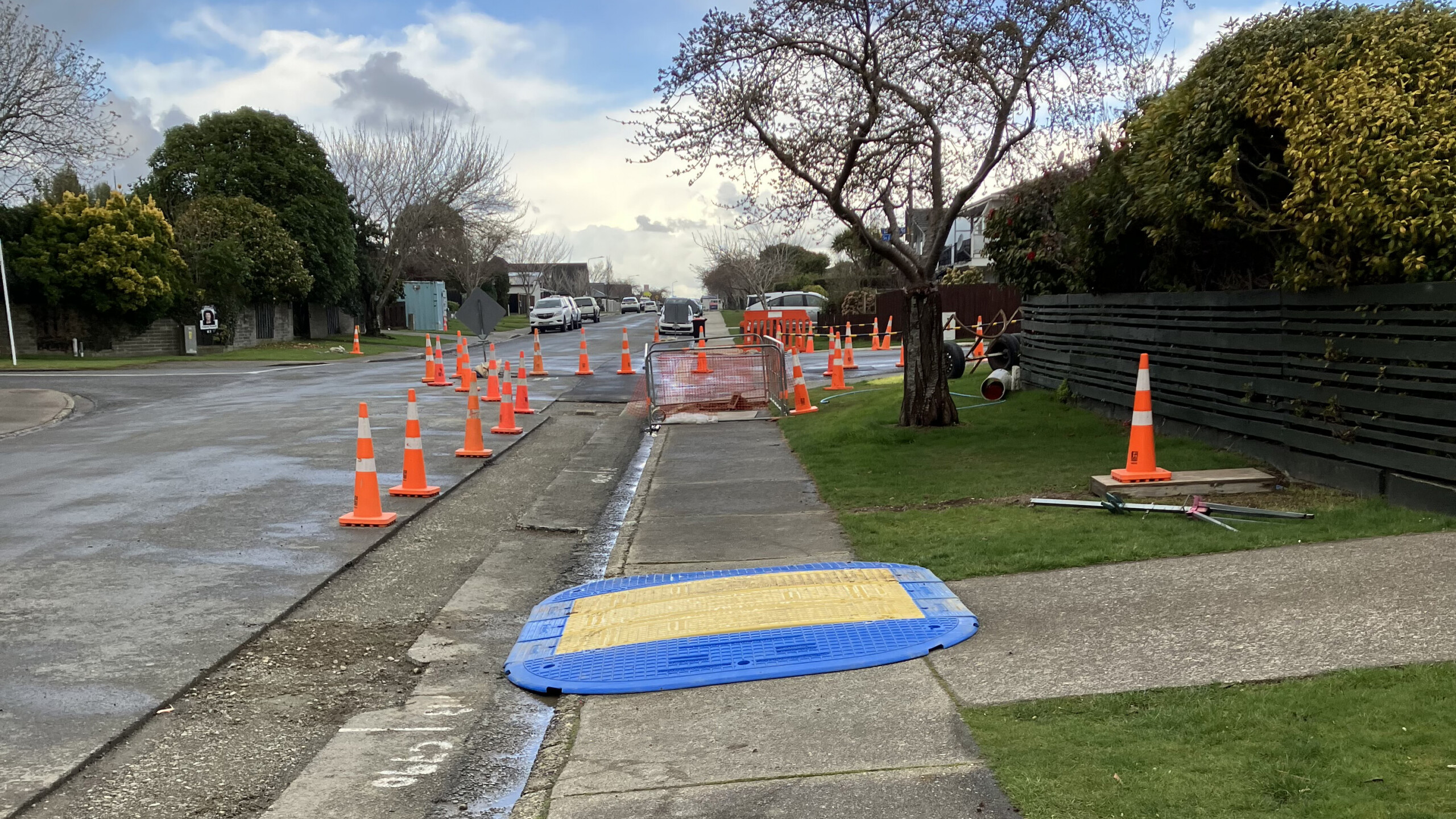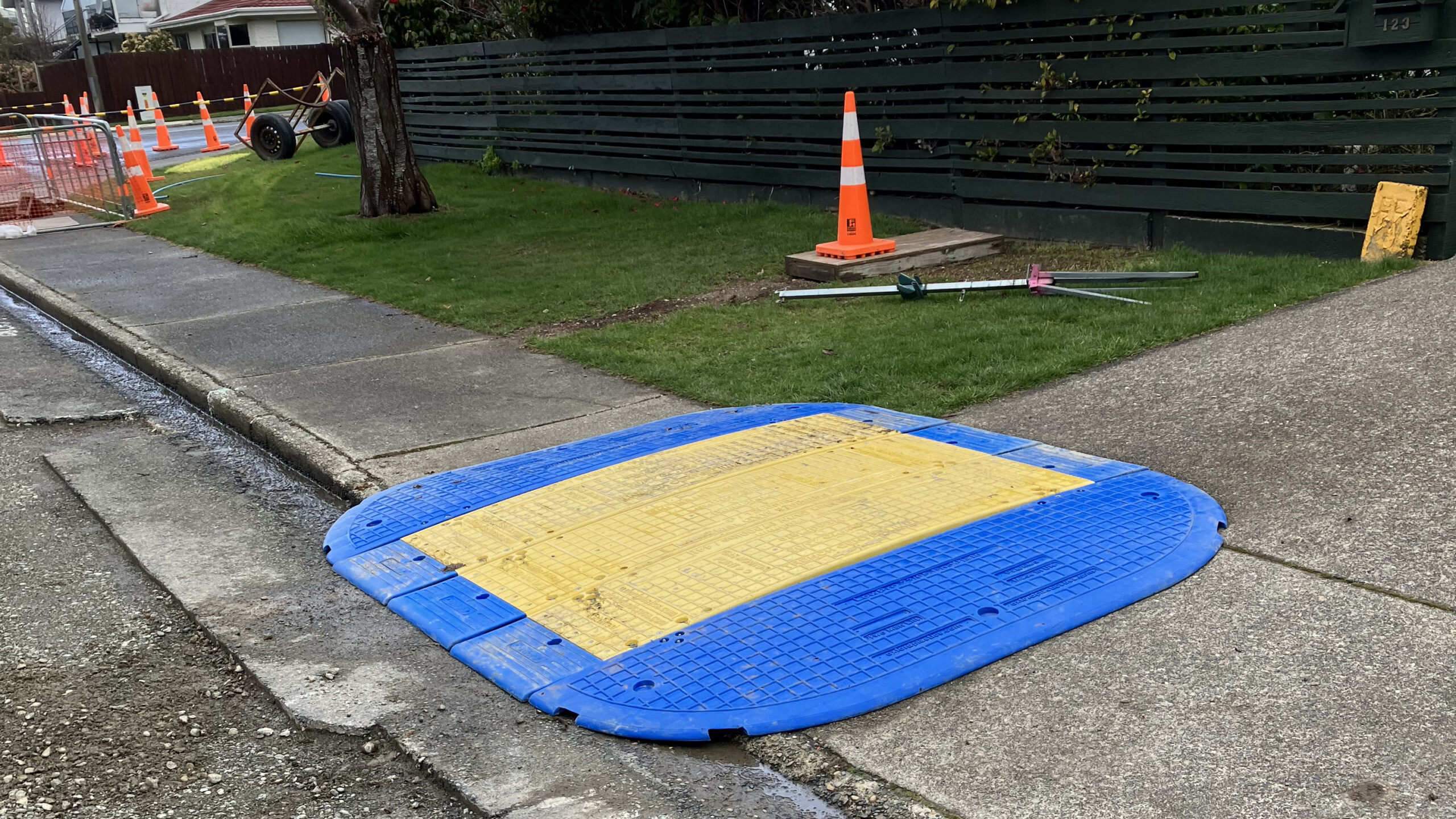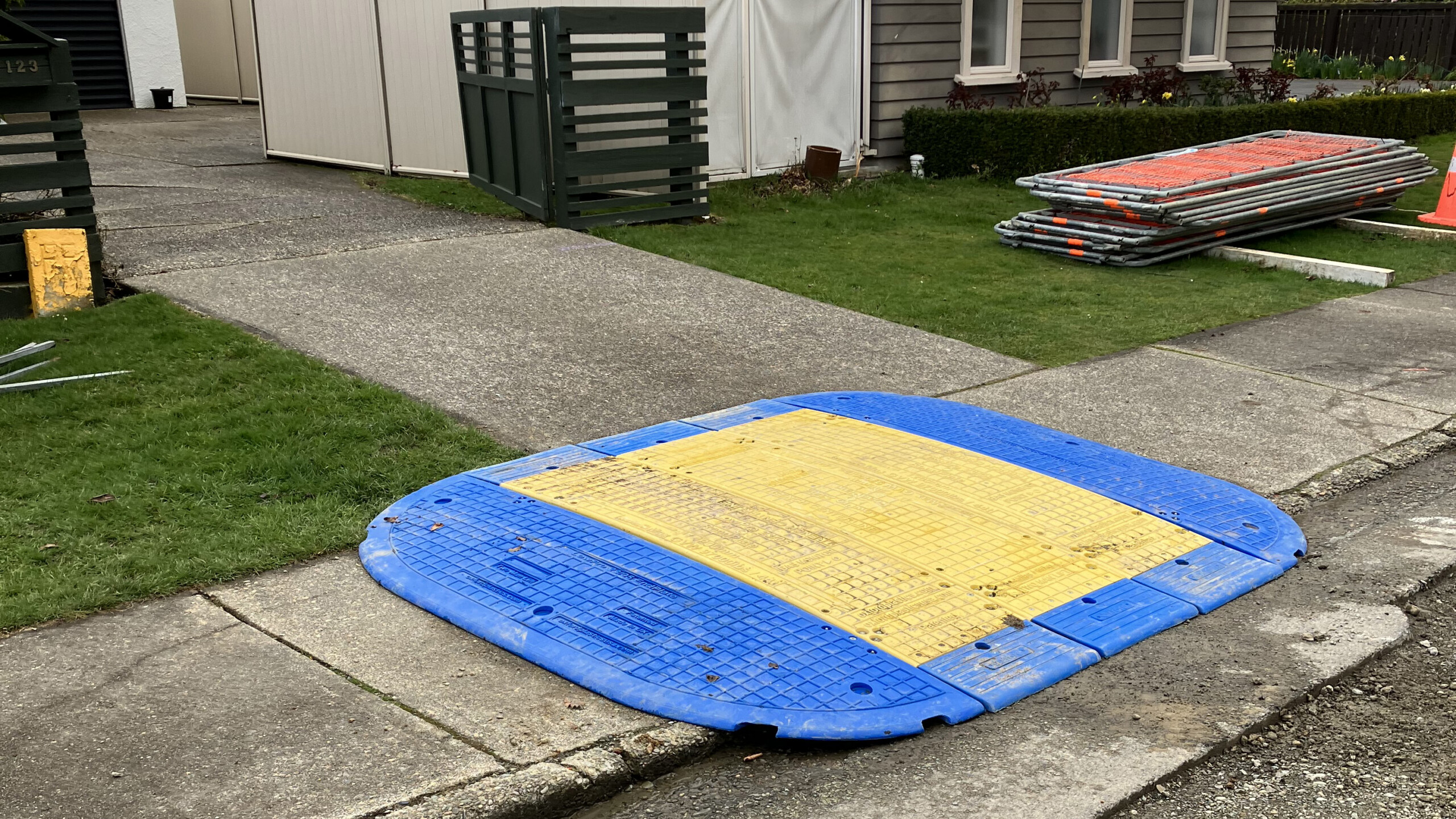
“Get the gorse out of your pockets and try them for yourself.”
Fulton Hogan (FH) Southland’s excavation teams – working across water, sewer, and stormwater projects – used to rely on large steel plates to cover trenches.
Over time, the plates became deformed, increased safety risks, and required additional labour to manoeuvre. Frustrated with the performance of steel plates, FH started the search for safer and more efficient alternatives.
In this Q&A, Contracting Divisional Manager Joe Findley explains how switching from steel to composite road plates provided a faster, safer, and more user-friendly solution.
Q: What is the nature of your excavation work?
A: Excavating for both mainline installation and property service laterals – on water, sewer and stormwater related projects.
Q: What methods did you previously use to cover trenches?
A: We had previously been using large steel plates (2400×1200 or 1200×1200)
Q: What challenges did you face with these methods?
A: These plates tended to warp over time and create their own hazard. Slinging and handling of steel plates were hazards we no longer wanted to accept on-site.
Q: What made you decide to switch from steel to composite plates?
A: We came across the composite plates at the Civil Contractors New Zealand (CCNZ) National Conference and liked the idea of being able to shift them without use of a machine and not have to sling them below a digger.
Q: How have composite plates offered a better solution?
A: The plates have increased the speed of some of our ancillary works and provided a far safer, more user-friendly solution that the team can modify the position of, without having to track the machine around site. The reduced movements of the machine have also prevented additional damage to out-of-scope surfaces.
Q: Since switching to composite plates, where have you seen the most impact?
A: Safety is the biggest win for us. There’s no longer the potential for our staff to be struck by a slung steel plate or be pinched between a steel plate and a hard surface. Time savings, no longer requiring a machine to shift the composite plates. This would likely equate to over 2 hours of time saved (total for all staff) per week.
Q: What would you say to people who think composite plates are not worth the upfront investment?
A: Get the gorse out of your pockets and try them for yourself. We are looking at adding more to our set. We currently have 24 plates (enough to bridge 12 linear meters). Our thinking is that 40 would be a good number for us to have, to keep our projects moving as planned. While we brought them for our drainage business, our construction, civil, maintenance, and surfacing teams have all used them for some of their works also.
If you’re considering making the switch from steel to composite road plates or need more advice, get in touch with our team so we can discuss the right solutions for your site and situation.