Client: Kilcoy Global Foods
Location: Bells Creek Facility, Sunshine Coast, Queensland, Australia
Established as a family-owned meat wholesaler in 1953, Kilcoy Global Foods has since grown into one of the world’s leading producers of Australian food solutions.
Over several decades, the business has steadily expanded its geographical spread. One of its latest moves has been the introduction of a purpose-built coldstore warehouse in the Sunshine Coast suburb of Bull Creek.
For Kilcoy, running a high-functioning facility depends heavily on providing maximum protection for its people, equipment, and structures, without bottlenecking operations.
When the safety controls put in place during the build weren’t adequately addressing on-site risks, Vanguard was approached to assess the site and recommend safer, more efficient solutions.
Client Challenge:
When the Bells Creek facility was first built, a steel box-section barrier was installed internally to create a delineated walkway and separate pedestrians from forklifts and other material-handling equipment (MHE). However, the barrier quickly presented some significant issues.
These included:
- Forklifts hitting barriers, causing the anchors to rip out of the concrete. This damaged the barriers and the concrete surface, resulting in costly repairs and operational downtime.
- Pedestrians kept stepping over the barrier into operational zones.
- The barrier became a tripping hazard for pedestrians.
- The barrier configuration (low height, no impact protection) provided insufficient physical separation between pedestrians and forklifts.
As a result, pedestrians were exposed to forklift and MHE impacts, the risk of injury increased, and the cost to repair the barrier and the damaged concrete underneath was significant.
Solutions Offered
After connecting with the team at Kilcoy, our AU Workplace Safety Division Manager, Jared Muller, headed to Bells Creek to meet with Kilcoy’s safety manager and walk the site to better understand the situation.
Seeing these risks firsthand and speaking with key stakeholders enabled us to develop a plan to significantly improve the site’s safety and efficiency. Our recommendation was as follows, and was adopted following consultation and careful consideration of the project budget.
Flexible, Energy-Absorbing Barriers
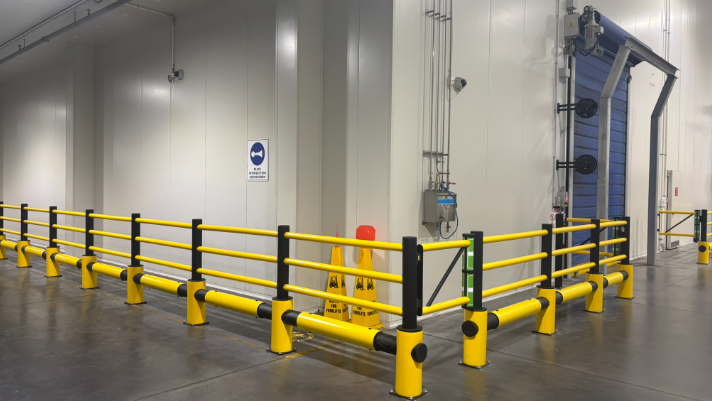
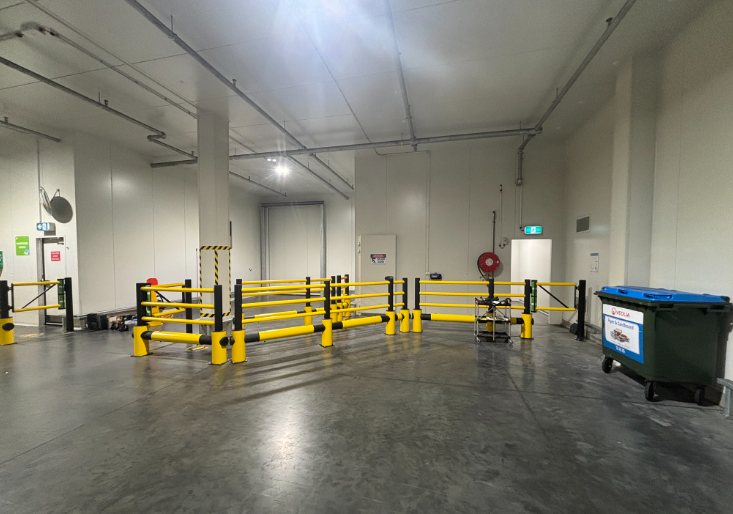
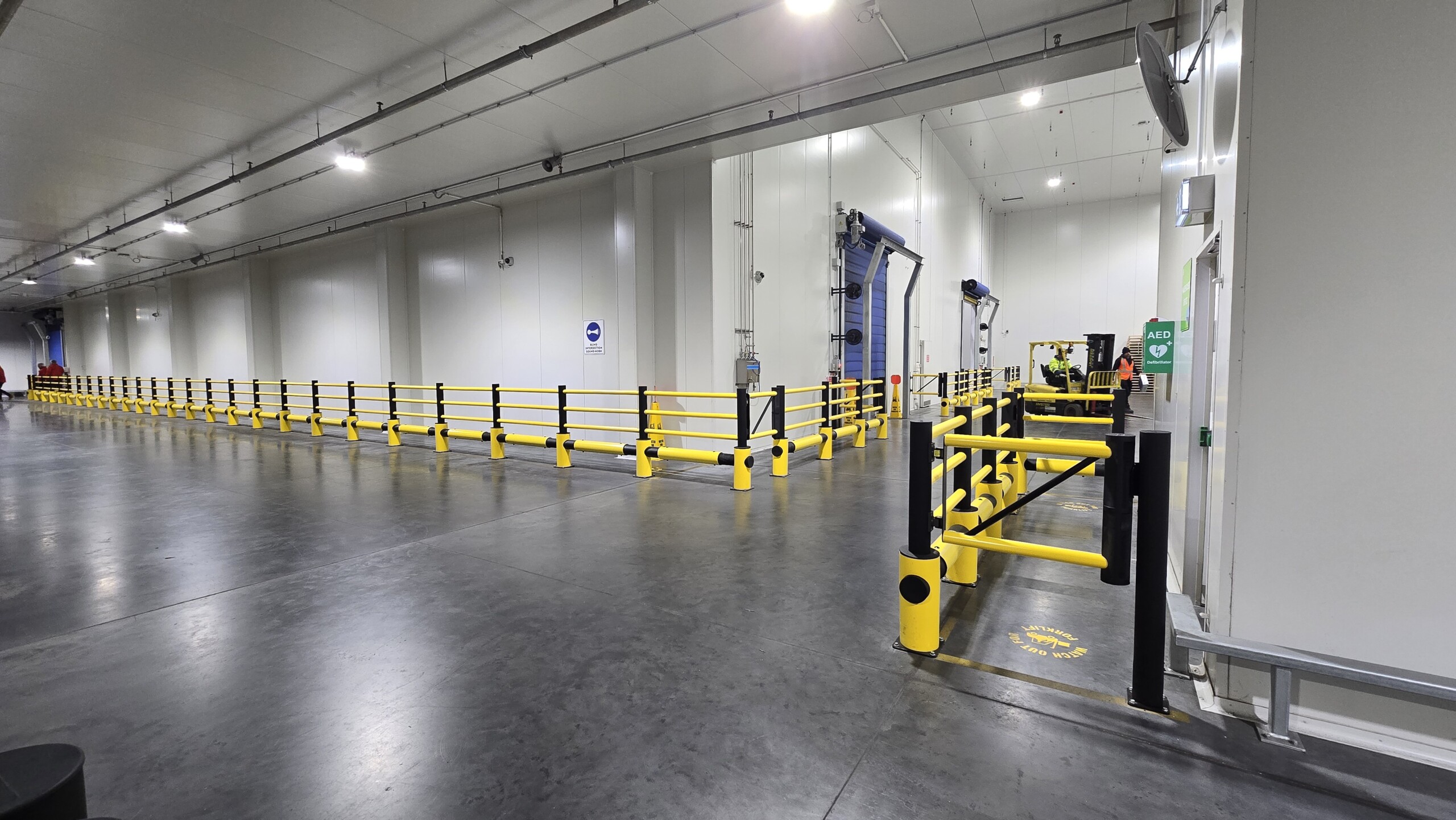
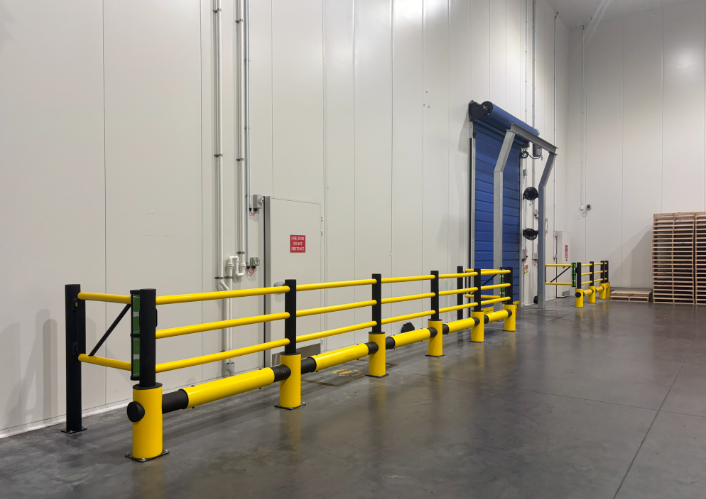
To create a clear, impact-rated walkway in areas with no physical protection for pedestrians from forklifts, Kilcoy installed a series of flexible, energy-absorbing barriers.
Slim in style, the barrier freed up a whole lot of operational space that would have been lost if a bulky W-Beam Barrier had been installed instead. At 1 metre high, it provided physical protection for pedestrians moving around the site, in case a forklift or other vehicle encroached on the walkway. It also prevented pedestrians from stepping over the existing steel box-section barrier and into the line of traffic.
Impact-rated to Match Risk
The barrier’s flexible material is rated to withstand impacts from forklifts and, when struck, is designed to absorb energy and return to its original shape. As a result, there is less pressure on the barrier anchors and a greatly reduced likelihood that the barrier will rip out of the concrete when hit.
Cool Storage-Friendly
The flexible material will also not chip or dent, which is essential for food manufacturing and cold storage environments where moisture is present, and food safety is paramount.
Reduced Operational Footprint
In bright safety yellow for clear visibility, the slim design of the flexible barriers allowed Kilcoy to keep operational footprint low—a game-changer for tight spaces with lots of movement.
The Outcome
Kilcoy’s experience is not an unfamiliar one. Too often, new builds are constructed without the appropriate safety controls to match site-specific risks. Failing to do so in the first instance means putting people and assets at risk, incurring additional costs to uninstall and reinstall a more effective system, and experiencing more operational downtime.
However, by identifying that the systems in place were inadequate early on, Kilcoy was able to engage our team at Vanguard to help them develop a better solution. By investing in flexible barriers to create pedestrian walkways in high-risk areas throughout the site, the team now have the assurance that their people and assets will be protected. Long-term, they will also significantly reduce the costs that come with maintenance and operational downtime.
How Can We Help?
If you need support mitigating safety risks and maximising efficiency on your site, we’re here to help. Get in touch with our team so we can understand your situation and work together to develop a comprehensive plan within your budget.
Unsure how our process works? Check out Vanguard’s 5-Step Safety Design Video.
To learn more about our barrier systems, you can check out our full range here.