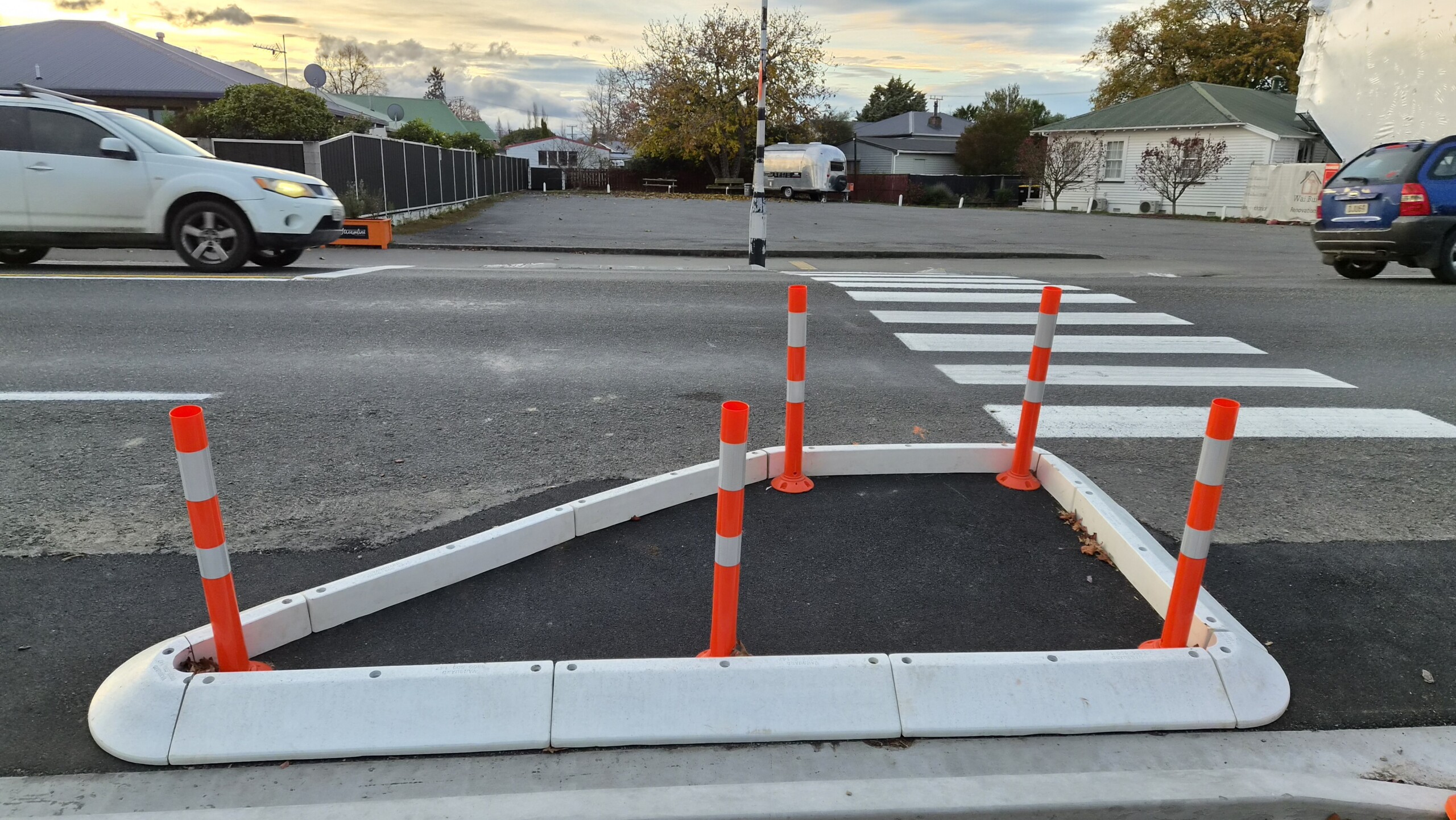
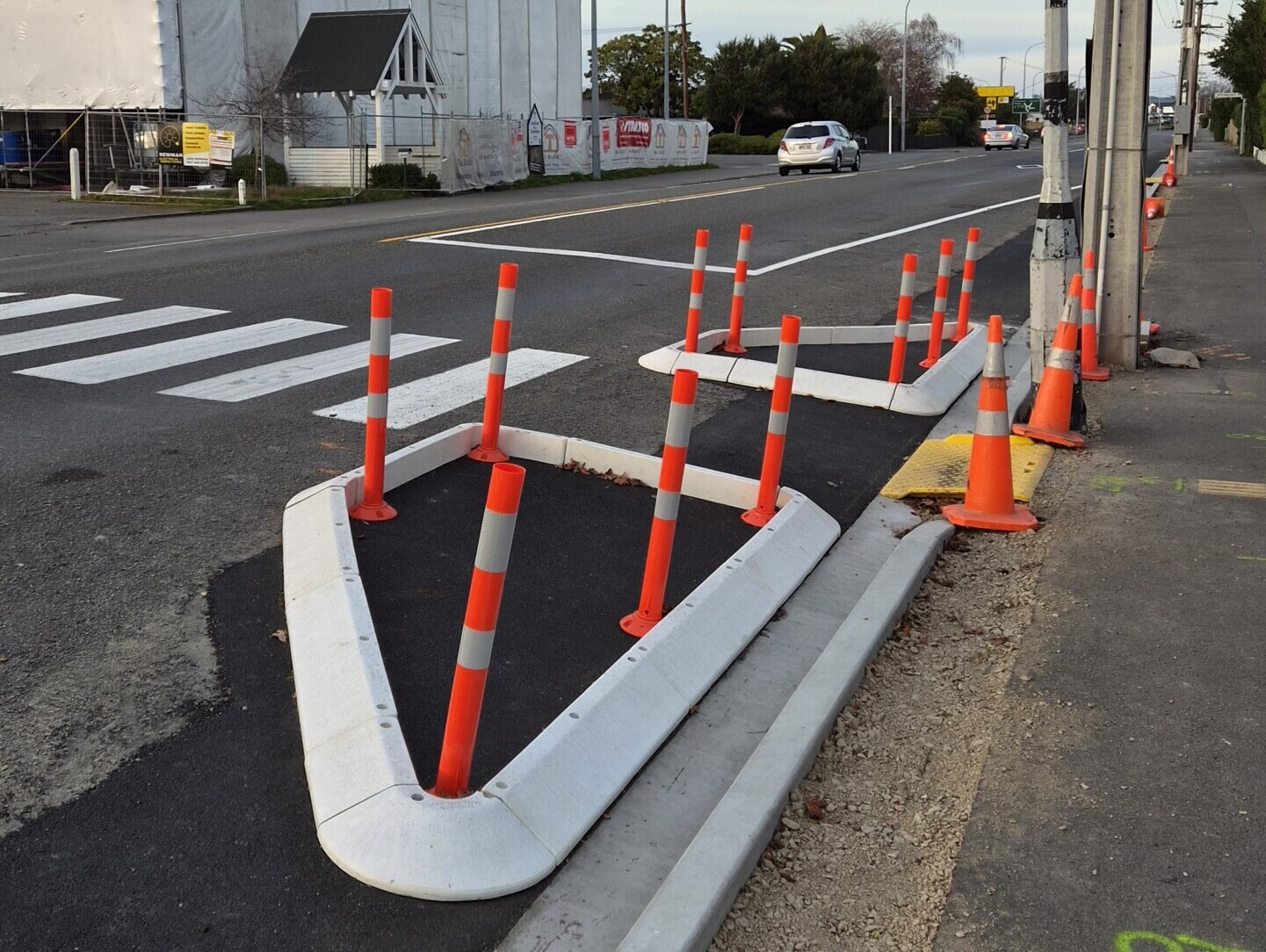
On this Masterton project, Fulton Hogan were installing new kerbing and channel and, as part of this, were needing to remove some concrete pedestrian refuge islands at a pedestrian crossing.
Once the work was completed, the road was to be resurfaced but this was not going to happen for a few months.
Leaving the crossing without a safe refuge for pedestrians was not an option, but building the concrete pedestrian refuge islands before the reseal would mean they would need to be dug up again.
So, the project team took an innovative approach.
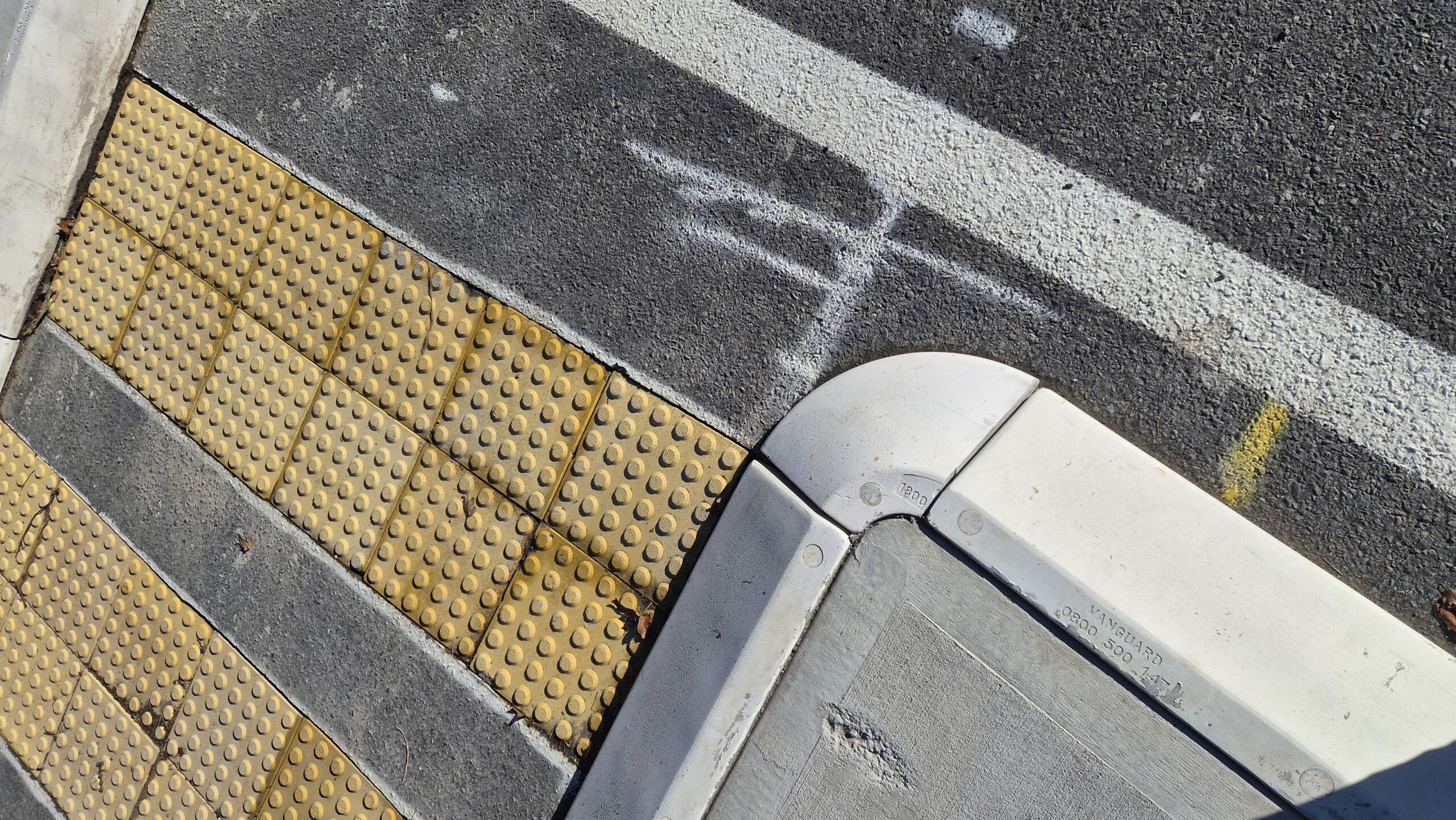
They installed modular rubber kerb blocks as a temporary island, complete with orange flexible delineator posts to clearly define the crossing point.
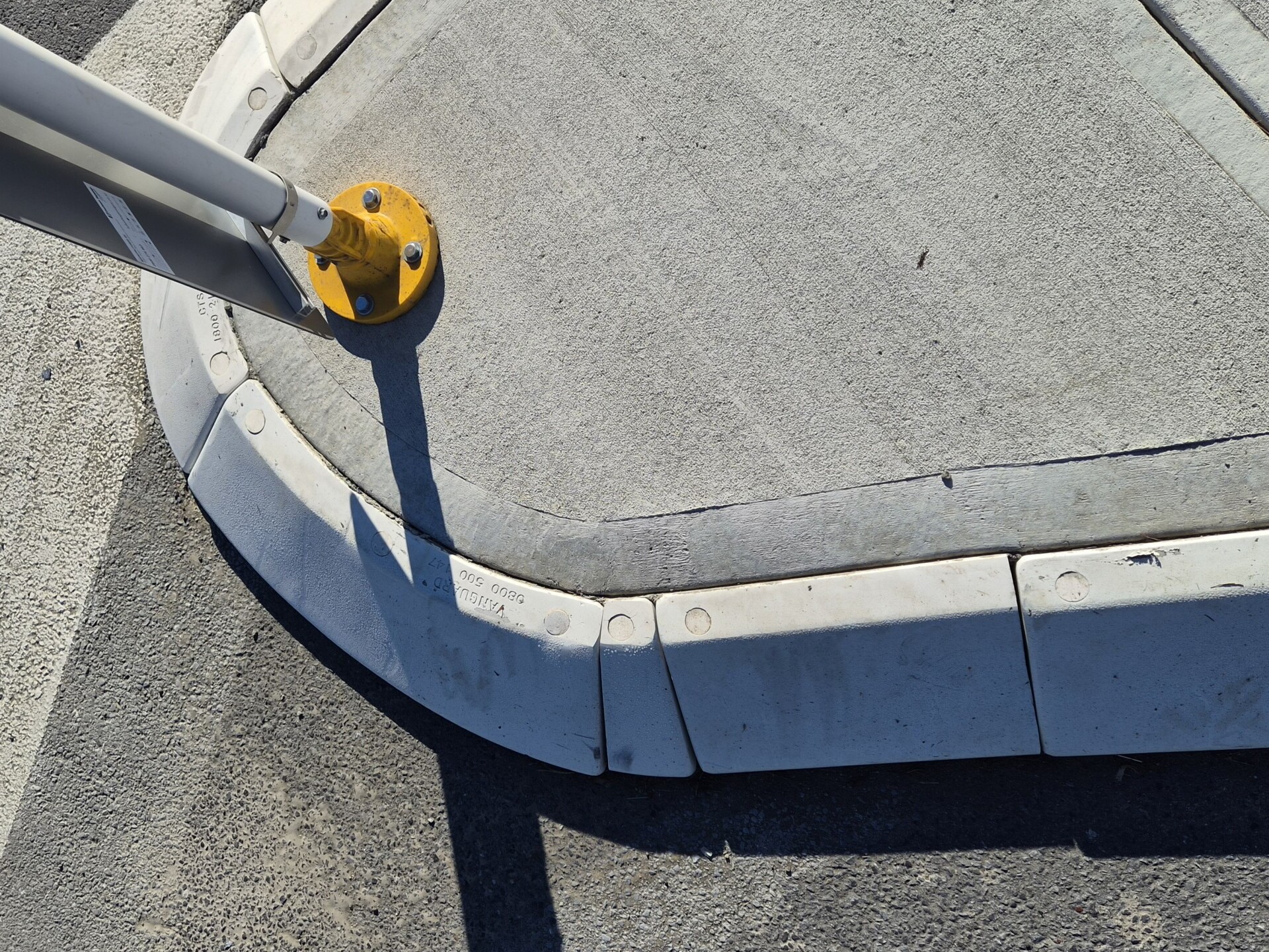
Once the resurfacing works are complete, the kerb blocks can simply be unbolted, the road resealed, and the same blocks reinstalled as part of the permanent island before being infilled with concrete or asphalt.
This was a great example of using the flexibility of modular rubber kerbing to solve a real-world construction challenge.
Credit to the Fulton Hogan Masterton team for finding a smarter way to keep the project moving while maintaining a safe pedestrian crossing throughout the works.
Client: Fulton Hogan Masterton, via Wellington Transport Alliance
Solutions used: Rubber Kerb Blocks
Q. Why was rubber kerbing selected for this project?
FH Team: The project involved removing an existing concrete island and installing new kerbing and channel. Once that was done, the paving team would come and resurface the road which would take place within the next couple of months.
In the meantime, we could not leave the crossing without a pedestrian island refuge, so we needed a temporary solution.
Using rubber kerb blocks meant we could install them and easily remove them for paving works to be done and then reinstate them permanently again once paving was complete.
Q. What was the general feedback from the team after completing install?
FH Team: Overall, quite happy with the ease of working with the product being lighter weight and simple to cut on site as required.
Some of the blocks were difficult to line up on uneven ground. This was exacerbated by the fact we were installing them temporally and weren’t using the glue between them to fill the gaps.
[NOTE: when installed permanently, construction sealant is used to fill the joins so the finish is smooth and looks permanent and complete.]
Q. Did you save any time or TTM cost when using rubber blocks compared to traditional concrete?
FH Team: Did not save TTM time as done in coordination with other works and the island was not on the critical path, however it was faster to install compared to installing traditional concrete islands.
Q. Did using rubber kerb blocks achieve the desired outcome?
FH Team: Yes, met the outcome. They were easy to install and could be easily removed and reinstalled as required.
If you’re facing a similar challenge and are curious as to whether rubber kerbing is the right fit for your project, get in touch for a chat.