

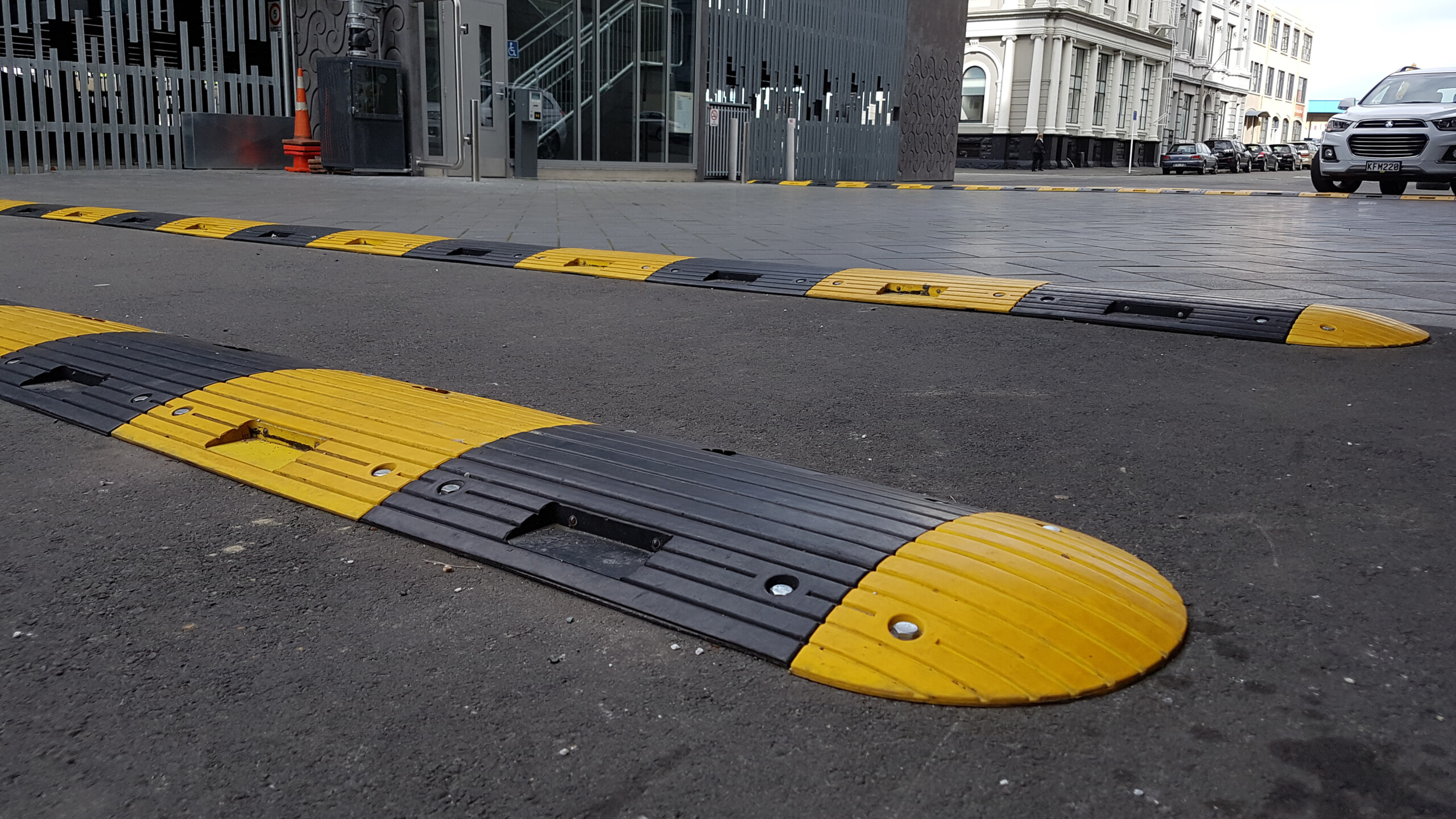
Are you wanting to slow down traffic in your workplace carpark, driveway, or private vehicle traffic environment?
Speed humps are a popular and effective solution, but choosing the right type is crucial for achieving your goals without causing unintended problems.
In this article:
- What are speed humps?
- What situations are speed humps suited for?
- 50mm vs 75mm – how to choose the right height
- How much do speed humps cost?
- How long will speed humps last?
- What to consider before installing speed humps
What are Speed Humps?
Speed humps are a traffic safety device used to create a physical obstruction that force drivers to slow down, reducing the risk of collisions between people, vehicles, and assets.
Our rubber speed humps are fully modular and feature a tongue-and-groove interlocking system for increased strength and fast installation.
Speed humps are the most popular speed calming device we supply and come in two heights:
What Situations Are Speed Humps Suited For?
Speed humps are designed to slow down standard-sized vehicles such as cars, utes, vans, and small trucks to speeds between 0-20 km/h.
They are commonly used in environments such as:
- Carparks: In shopping centres, supermarkets, recreational areas and businesses.
- High pedestrian traffic areas: Places where pedestrians frequently cross or walk along roadways.
- Exits onto busy roads: Where vehicles need to slow down before entering a high-traffic area.
- Private property and warehousing: Managing speed in private areas to protect employees.
- Quieter roads: Managing speed on residential streets or roads with lower traffic volumes.
Because of the abruptness of the bump, we do not recommend speed humps be used on main roads or for slowing down heavy vehicle traffic such as large trucks and buses.
If you want to explore other speed calming options, check out our complete guide to all speed calmers.
Height Matters: 50mm vs 75mm
What is the difference between our 50mm-high and our 75mm-high speed hump, and which type should you use?
Although 25mm mightn’t appear significant, the profile difference when driving over the 50mm compared to the 75mm speed hump is huge.
The 50mm-high speed hump is a more gentle bump, designed to slow vehicles down to 15-20 km/h. Whereas the 75mm-high speed hump is a very abrupt bump to drive over and will slow vehicles down to 5 km/h or less (a near stop).
If you want to slow down standard-sized vehicles in a carpark or workplace, the more popular 50mm high rubber speed hump will suffice in most situations. Only in very high risk areas where you need vehicles to come to a near stop would you consider the much more aggressive 75mm-high speed hump.
If you’re still undecided as to which height speed hump is best for your situation, we break it down further below.
When to Choose the 50mm Speed Hump
The most commonly used speed hump is the 50mm size. It offers a gentler approach to speed reduction. They will manage speed to around 15-20kmh and are a good choice for:
- General purpose traffic calming in parking lots, such as supermarkets, and other areas where you want to reduce speed without being overly disruptive.
- Site entrance where vehicle traffic transitions from public to private roads, with different speed limits.
- Car parks with speed limits: Environments where you want to encourage drivers to stay within a reasonable speed range.
- Areas with a variety of vehicle types (but not trucks): 50mm speed humps are generally suitable for a wider range of vehicles, including those with lower ground clearance.
Important Considerations:
- They may not be sufficient in high-risk areas or where a significant speed reduction is needed, such as at blind corners or when a full stop is required.
- They are not designed to be used on roads – for speed calming on public roads, we recommend Speed Cushion Pads or Raised Speed Tables
Check out our comprehensive explainer video below for a practical breakdown and to see the 50mm-high speed hump in action.
When to Choose the 75mm Speed Hump
75mm speed humps are the most extreme option for speed management. Their abrupt profile slows vehicles to less than 5 km/h. They are designed to provide a significant and immediate speed reduction, making them ideal for:
- High-risk areas and locations with a history of collisions or near misses
- Blind corners with limited visibility and where vehicles need to slow down dramatically
- Very low-speed environments where you need to ensure vehicles are travelling at a crawl
Important Considerations:
- Vehicles with low ground clearance will find 75mm speed humps a challenge
- They can be uncomfortable for drivers if they don’t slow down enough, so we caution against using them in busy public carparks – unless it’s a high-risk situation
- They are not designed to be used on roads – for speed calming on public roads, we recommend Speed Cushion Pads or Raised Speed Tables
Check out our comprehensive explainer video below for a practical breakdown and to see the 75mm-high speed hump in action.
Installation and Cost Considerations
Regardless of the height you choose, there are a few installation and cost factors to keep in mind.
The surface is important. Vanguard’s rubber speed humps can be installed into asphalt, concrete or chipseal, however if your surface is in poor condition (e.g. has cracking or rutting/potholing) its best to repair this first. Otherwise, installing it on a damaged ground surface can make it worse. The centre modules (and end caps) interlock with each other and are screwed or bolted on. This means they can be configured to fit across all road widths. Image: Interlocking 75mm(H) speed hump module and end cap
How Much Do Speed Humps Cost?
The exact price will depend on how wide your speed hump needs to be, how many you are installing, what surface you have and whether you need glue (which we recommend if you have a lot of heavy vehicles or high traffic volume). However, to give you a guide per metre, you can estimate:
- 50mm = $140 – 150 per metre
- 75mm = $150 – 160 per metre.
Note the estimates above are exclusive of freight, installation and GST. If you need an accurate quote, Vanguard’s team can prepare this for you once the type of speed hump and quantity are known.
How Long Will Speed Humps Last?
While there is no single answer to this question, you can expect at least 5 years in typical conditions.
The lifespan can be longer if you install the right type for the expected use. Less volume and heavy vehicles will mean less damage. Proper installation will also mean less movement and damage, and your investment will last longer.
Regular maintenance, such as inspection for damage and re-tightening any loose screws, can also extend the lifespan of rubber speed humps. The great news is, you can replace any damaged modules quickly and easily to keep it working effectively (and minimise maintenance costs).
What if Speed Humps Aren’t the Right Fit?
There are many different types of speed calming solutions available and speed humps may not be the right choice for your situation. Different designs achieve different results and the type you choose will depend on your environment, the type and volume of vehicle traffic, and your safety goals.
Before you settle on speed humps, start with a quick check that includes:
- Risk Assessment – What are your potential hazards and areas where do you need speed reduction the most?
- Vehicle Types – What types of vehicles will be using the area (cars, trucks, buses, forklifts, etc.)?
- Pedestrian Movements – Will people need to cross roads or access areas in the worksite?
- Existing Surface – Will you be installing on asphalt, concrete or other?
- Local Regulations – Are there any local regulations or guidelines you need to comply with when installing speed humps?
If you want to explore other speed calming options, check out our complete guide to all speed calmers.
Selecting the right speed hump is crucial for achieving safe speeds and ensuring an effective solution is put in place. By thoughtfully evaluating the key factors discussed in this article, you will be well equipped to make the best choice.
If you need further guidance on choosing the right speed hump for your project or managing speed in your workplace, please get in touch.
