Creating A Safe and Productive Workplace with NZ Post

NZ Post is making a significant investment in a new site equipped with advanced high-tech conveyors. This new development is poised to enhance their operational efficiency and capacity.

The primary safety challenges faced by NZ Post at their new site included:

  • Pedestrian Safety: There was a critical need to separate pedestrians on walkways from the heavy truck traffic prevalent at the site.
  • Safe Crossing Points: Ensuring that pedestrians had safe crossing points and walkways was essential to prevent accidents.
  • Protection of Machinery: The high-tech machinery and conveying systems required protection from potential damage caused by material handling equipment and pallet trolleys.

To address these challenges, Vanguard provided an end-to-end safety solution including:

  • Tru-Gard 910-2 Double Rail Barrier: This barrier was installed to protect pedestrians from trucks on walkways, ensuring a clear separation and enhancing pedestrian safety.
  • Tru-Gard 610-1 Single Barrier: These barriers were utilised to protect structures and conveyors, safeguarding the critical high-tech systems from potential impacts.
  • Steel Guards: Installed to offer additional protection to the conveyors, these guards ensure the smooth operation of the conveying systems without interruption.
  • Surface Mounted Bollards: These were strategically placed to protect doorways, ensuring that entry and exit points remained safe from potential collisions.

The implementation of these safety measures by Vanguard has enhanced the safety and operational efficiency at NZ Post’s new site. Pedestrians can now navigate the site safely, and high-tech machinery are also well-protected – reducing the overall risk of accidents and damage.


The Switch From Steel To Composite Plates: Interview With Andy Hunte From Citycare

Citycare Water Construction installs new water pipes and replaces service leads to properties using directional drilling for water main renewals. They previously used heavy steel or timber plates to cover trenches, but switched to lightweight composite plates that can be installed by two people, saving time and money.

What kind of work does Citycare Water Construction do?

We mainly focus on water main renewals, which involve installing new water pipes using directional drilling and replacing service leads to each affected property. So, our sites often have small excavations in the footpath or driveway that need constant access. To make sure people are safe, we are careful to cover any holes on site.

What techniques were you using previously to cover trenches, and what issues did you encounter with them?

Before we got composite plates, timber and steel were our only options for covering up excavations. Steel is tough enough to use on sidewalks, driveways, and roads, but it’s so heavy that you need a digger or other lifting equipment just to move it around. There was also always the risk that a steel plate might not be thick enough, and you could end up with an uneven surface that posed a tripping hazard if hot mix wasn’t applied to the edges. So setting them in place, or even shifting them a bit, was always a challenge.

How have composite plates changed the way you work? 

Composite plates have been a game-changer for us in terms of excavation safety. We are now able to handle and move the carriageway plates without needing any lifting equipment – all it takes is two people. The plates can support just as much weight as any steel plate but without the need to bring a digger on site. It’s saved us time and money as we no longer require machinery or other consumables.

Related: Composite Road Plates vs Steel – Which Is Best?

Where have you seen the biggest impact in your work? 

We no longer need to use consumable products or expensive lifting equipment for our steel plates, which saves us a lot of money. Composite plates are light enough for two people to install. This reduces the Health and Safety risk of lifting loads and crush injuries substantially. They are also very quick to install, which helps efficiencies on site. The team are confident about the performance of the plate and the weights it can withstand, and they are more willing to open up driveways and footpaths as the protection is readily available.

Related: Are Composite Road Plates Really Safer and More Efficient Than Steel?

What would you say to people who think composite plates are not worth the upfront investment? 

The cost of hiring a steel plate is between $50 and $80 per day, plus a pick-up and delivery charge of $150. If we take a typical water main renewal site where you may have the requirement of between 2 to 3 steel plates for up to 4 weeks’ the total cost would be between $1000 and $1600 per site. In contrast, the cost of a composite plate is $495, last year, we completed 13 renewals sites and 72 site connections, and the composite plates paid themselves back fourfold. To me, it’s a no-brainer to switch to the composite plates.


— Construction Manager Andy Hunte, Citycare Water Construction 

Slip Response: Higgins Votes Traffic Separators Over Cones

When major slips occur, robust Temporary Traffic Management (TTM) is required to ensure the safe and efficient flow of vehicles, particularly when it’s needed on a long-term basis.

This was the case for Higgins Palmerston North, which was tasked with implementing a TTM system following a significant slip on State Highway 4, near Matahiwi (Te Ore Ore), that destroyed a large section of the road and forced its closure.

Finding a Safe Route

According to Waka Kotahi New Zealand Transport Agency, “the slip caused major disruption to iwi, the community, businesses, and tourists who frequent the road. Around 2,000 vehicles on average use the road daily”.

The closure meant that anyone travelling between Ohakune or Raetihi and Whanganui had to take a detour via Fields Track, which added at least an hour to their trip.

Once engineers had confirmed the area had stabilised, a temporary road reconnecting State Highway 4 Raetihi to Whanganui was opened in December 2019.

As a specialist in infrastructure and road maintenance, Higgins sought a TTM solution to manage traffic through this high-volume area for 12 months.

The team’s goal was to:

  • Reduce speed near the slip site
  • Create a clear lane delineation
  • Manage traffic flow safely and efficiently
  • Find a low-maintenance solution

An Effective, Low-Maintenance Solution

Higgins’s project manager consulted with Vanguard Group to find a TTM solution. After gaining an understanding of their situation and what the team set out to achieve, Higgins installed one of our Traffic Separator Systems, the Flexible Traffic Separator.

Also dubbed ‘the traffic snake’, the rubber separators work together as a robust interlocking system and are primarily used for vehicle/lane segregation, ensuring clear lane separation and preventing vehicles from crossing the centre line.

The reflective, flexible posts feature a quick-release system, allowing for easy removal and installation. The modular, recycled rubber base system can also be fixed for permanent or semi-permanent use, or laid loose for temporary situations.

As a smarter alternative to standard road cones, the flexible traffic separators were placed down the centerline of a 400m stretch of State Highway 4. Because they could be pinned to the road, they were more likely to remain in place, resulting in reduced maintenance.

Traffic Separators Review

Emergency Works Recovery Manager Malcolm Chiles said the flexible traffic separators were much safer and more effective for the project than cones, and prevented road users from having to take a lengthy detour.

The Outcome:

  • Reduced vehicle speed
  • Managed traffic flow
  • Protected against hazards
  • Easy installation and removal
  • Long-term TTM support
  • Reduced maintenance


“We have undertaken maintenance on the base units and replaced missing posts approximately 6-8 times over this period [but] if we had used cones, maintenance would have been required probably every day!”


Vanguard’s Traffic Separator and Ultra-Separator systems are now approved for use under the draft M23 Appendix F standard (page  20).

Got a project or site that needs safe and efficient safety controls? Not sure which TTM solution is the right choice for your site? Get in touch with our team, we’re here to help.


Related Content: “TTM Risk: How to Choose the Right Traffic Controls for Your Site”.


State Highway 4, near Matahiwi (Te Ore Ore), where the slip occurred.

SH4 Traffic Separator TTMProject

How Coca-Cola Upgraded Its Traffic Management Controls in Just 20 Days

Client: Coca-Cola Europacific Partners (CCEP NZ)
Location: Mt Wellington, Auckland, New Zealand

With a newly extended and very busy Inwards Goods and railside operation area, Coca-Cola Europacific Partners needed to upgrade traffic management controls to bring it up to corporate safety standards. Additionally, global management was scheduled to visit the site, and there were only 20 days to complete the upgrade. NZ and Pacific Health & Safety Lead Sam Rogers knew the stakes were high — to implement the physical controls while maintaining daily site operations.

Sam reached out to Vanguard to help with this project. Our team of consultants knew that time was tight, but we were up for the challenge and wanted to see the project succeed.

Sam led a walkthrough of the entire site with the Vanguard project team to help us understand the operational flows and specific risk areas that needed to be addressed. This hands-on approach allowed us to fully grasp what Sam was trying to achieve before we proposed solutions. After the full site scope, we got to work designing appropriate solutions for each area.

Client Challenges:

  • Unprotected walkways: Many pedestrian paths relied solely on painted lines, with no physical protection between people and vehicles.
  • Unsafe truck driver zones: Lack of clearly marked, protected waiting spaces for drivers.
  • Unsegregated high-traffic zones: Forklift and truck routes intersect with pedestrian areas, creating significant safety risks.
  • Time: Completing a project of this size in 20 days is usually considered unachievable.

Solutions Offered:

  • d-flexx Energy Absorbing Bollards: Certified, shock-absorbent and highly impact-resistant safety bollards that provide instant high-quality protection to structures and equipment from damage from light vehicles and machinery.
  • 910 Double Barrier: Steel barriers create a physical layer of protection and separation between pedestrians, forklifts and other material handling equipment.
  • Line Markings: Walkways and exclusion zones required painting throughout the site to provide clear demarcation of safe and operational areas.
  • Pedestrian Pause Gates: Prevent pedestrians from walking straight into active forklift or truck zones.
  • Driver Safe Zones: Clearly defined, protected waiting areas for truck drivers, giving them a safe space to wait while trucks were loaded and unloaded
  • Installation: Ground preparation and concrete work were required to prepare the site for installation; all barriers were then installed.

Next Steps:

These solutions were presented as visual design concepts to Sam and her team, showing how the recommended solutions would look on-site. This allowed them to visualise the outcome and make minor adjustments to ensure that safety controls would not impact operational traffic flow.

To ensure this project ran smoothly, Ando Gagiano, Vanguard’s in-house installation manager, was involved from day one to plan the installation process and also allowed CCEP NZ’s site to continue operating during the project.

Once the designs were signed off, our installation team worked closely with CCEP NZ’s operational team to plan and implement the installation of recommended solutions.

The Outcome:

In just 20 days, Sam and her team successfully transformed the CCEP NZ site into a safer workplace. The upgrades met safety and operational goals, creating a workplace they could confidently present to global management. The project resulted in several positive outcomes, including:

  • Peace of mind: CCEP NZ’s team can now operate the site with confidence, knowing their employees and contractors can safely perform their job in a protected environment.
  • Improved team morale: The safety upgrades reinforced a culture of care, empowering the team to work with pride and purpose.
  • Recognition from global management: Sam and her team showcased a site that met the highest safety standards, leaving a lasting impression during the visit.

By partnering with Vanguard, Sam and the CCEP NZ team achieved their desired outcome under tight timeframes.


“I would like to give a big thank you to the Vanguard team; especially Tim Boon, Ando Gagiano, and Hannah Goodin for pulling together to help design and install the traffic management solutions for our Oasis site in record time. 20 days from start to finish as part of an install to complete the Railside Extension and make our entranceways safer under a deadline for the opening of the new Railside. I couldn’t have asked for a better team to help me out. Thank you so much!” — Sam Rodgers, Coca-Cola Europacific Health & Safety Lead


Needing to upgrade traffic management controls and safety at your Workplace? Get in touch with us to get started.

d-flexx barrierExpandable Barrier

Winstone Wallboards: How a Safety Project Also Improved Operational Flows

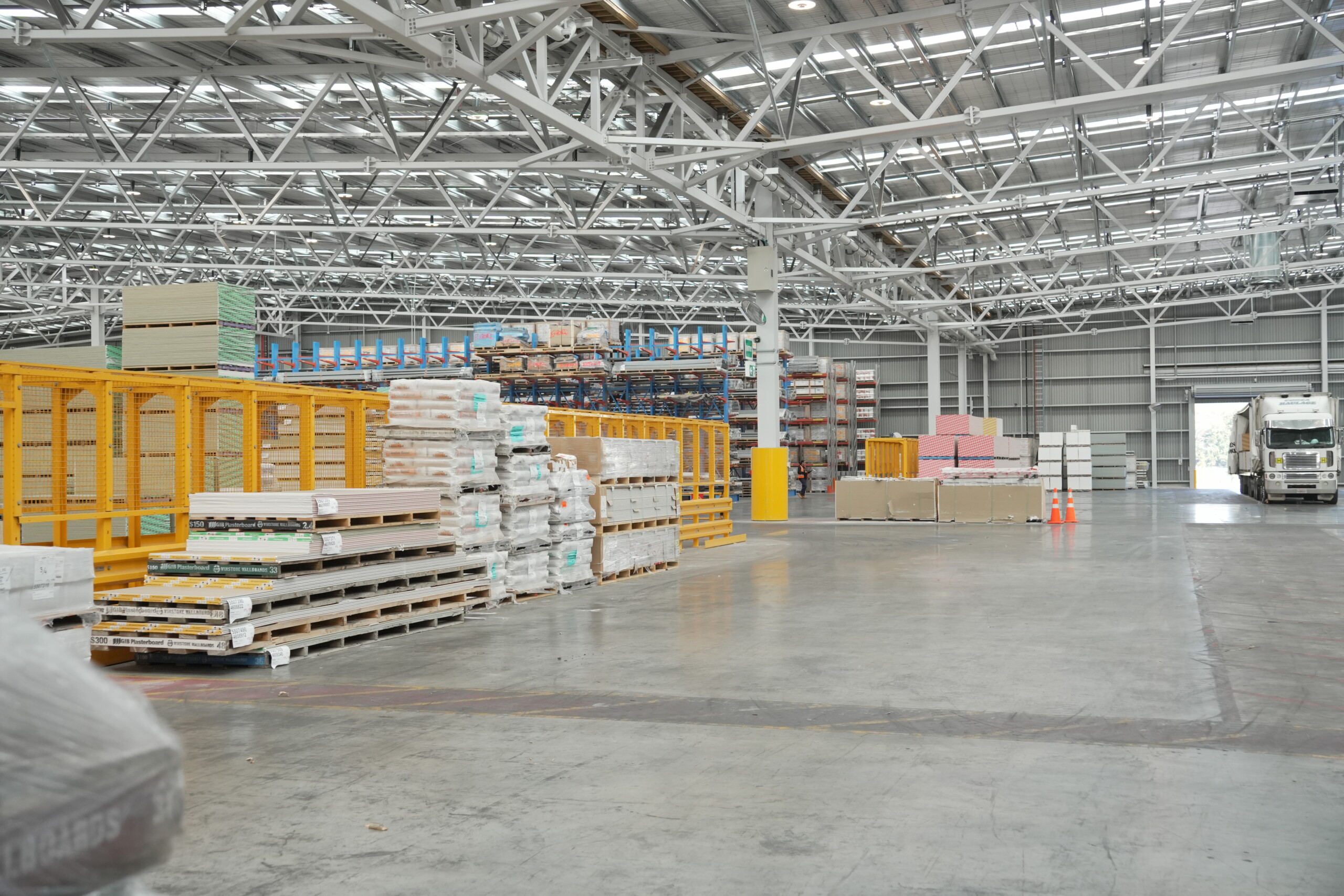
With a new warehouse spanning the length of eight rugby fields, it was crucial for Winstone Wallboards to find ways to protect their staff from the risk of falling objects without slowing down their day-to-day operations. Faced with this challenge in their new facility, Winstone Wallboards reached out to us, seeking an innovative safety solution to keep their pathways safe and efficient.

To address this concern, Vanguard collaborated with Winstone Wallboards to design a unique tunnel barrier system. These tunnels are not only long, spanning an impressive 130 meters, but also strong enough to withstand heavy impacts—certified to handle weights up to 400kg falling from as high as 800mm.

The result? A cutting-edge safety solution that ensures everyone in the facility can move around freely and safely, proving Vanguard’s commitment to innovative, end-to-end safety solutions. This case study demonstrates Vanguard’s capability to tackle big safety challenges and tailor solutions that go beyond the norm, making large spaces safer for everyone.


For a deeper dive into how Vanguard achieved this, you can read the full interview we conducted with Stewart Vaughan, the Project Lead at Winstone Wallboards, below. His insights offer a first-hand look at the collaboration and innovation behind making one of the largest plasterboard facilities in Australasia a model of workplace safety.

What was the particular problem Winstone Wallboards needed Vanguard’s safety specialists to solve?

Winstone Wallboards faced the challenge of integrating safe pedestrian pathways in a high-risk environment where goods were stored at heights. They needed a solution that would protect against the danger of falling objects while maintaining operational efficiency.

 How did Vanguard’s solution address this problem? 

Vanguard developed a tunnel walkway system that provided robust protection for the warehouse’s pedestrian areas. This solution involved custom-designed barriers that prevented any potential accidents involving falling goods, effectively securing the pathways below.

How has the solution impacted productivity?

The installation of the tunnel walkways significantly enhanced the layout of the warehouse, enabling Winstone Wallboards to utilise their space more efficiently. This measure allowed for smoother operations and increased storage capacity, directly boosting productivity levels.

What has been the staff reaction to the product? How have Vanguard created a safer environment for them?

The feedback from staff has been extremely positive. The Vanguard solution has made them feel safer and more confident while navigating the warehouse. By clearly defining and securing pedestrian zones, Vanguard has significantly reduced workplace hazards, contributing to a better working environment.

What was the story behind how Winstone Wallboards found Vanguard? What convinced them to work with Vanguard?

Winstone Wallboards sought a safety solutions provider who could tailor their services to meet specific and complex needs. Vanguard’s reputation for customised safety installations and their proactive approach to understanding client challenges were key factors that led to this partnership.

Has Vanguard met or exceeded these expectations? If so, how have they done so?

Vanguard has not only met but also exceeded Winstone Wallboards’ expectations by delivering a solution that surpasses standard safety measures. Their ability to innovate and adapt to the unique layout and risks of the warehouse ensured that all safety concerns were comprehensively addressed.

If you’re looking to discuss your current projects and enhance safety in your workspace, we’re here to help. Reach out to us at [email protected] to start the conversation.

Park & Ride Project at Auckland Airport with Fulton Hogan

With the newly constructed 3,600-space carpark (Park & Ride) at Auckland Airport, Fulton Hogan was running to a tight schedule to have this significant project opened on time for Auckland International Airport.

The project scope involved specifying and supplying traffic safety controls, and installation needed to start and finish over 4 weeks, to work around a tight schedule of asphalting and line marking work.

Client Challenge:

The chosen supply partner couldn’t drop the ball and definitely couldn’t say ‘sorry the delivery is going to be delayed…’ !

In addition to the time constraints, due to the number of wheel stops and bollards required, they wouldn’t be able to receive everything on site in one go as it would take up too much space.

Fulton Hogan needed a supply partner that could give them confidence in their ability to supply in full, on time, and work around a fast-paced construction schedule.

Solutions Offered:

Vanguard partnered with Fulton Hogan to deliver on specifying and supplying traffic management controls within the carpark. This included:

Outcome:

Our team constantly communicated with the estimators working through design changes, liaising with the site team on deliveries and helping manage the full supply and delivery aspect so that Fulton Hogan could keep moving. 

We were able to store stock for the full project in our warehouse and then supply in stages as required, allowing the team onsite to keep moving on their schedule and be confident that the stock would be there when they needed it.