


Do you need steel barriers in your workplace?
Perhaps you’ve considered it, but uncertainty about the cost has held you back from making a decision.
By installing steel barriers in your workplace, you can significantly reduce the risk of harm to people and vehicles by keeping them separate and protected.
Whether you’re considering investing or are ready to upgrade your existing steel barriers, having a comprehensive understanding of where they fit into your budget is crucial.
In this article, we’ll cover everything you need to know about steel barrier cost, alternative options, and what factors influence cost, so you can make an informed decision that’s right for your workplace, situation, and budget.
Steel Barriers Cost: Why Are Some So Cheap and Some So Expensive?
Let’s start with the basics — when it comes to steel barriers, here’s what you can expect from the price range:
- Walkway and asset protection steel barriers can range from $150/m to $600/m.
- Higher steel barriers, such as cages, tunnels, and topple barriers, can range from $800/m to $1050/m.
You might be wondering, “Why such a big range in price?”. Several factors influence steel barrier pricing, including the supplier used, the location of the manufacturer, the level of protection required, and the chosen configuration. The cost for steel barriers across these suppliers is relatively similar. However, the quality can vary.
After over 30 years of helping clients create safer workplaces, we understand the importance of taking the time to understand what you’re trying to achieve so we can recommend the right barrier solution for your situation. At Vanguard, we believe in providing a quality product that meets market needs at an affordable price.
Having a barrier that does the job it needs to and is available at a fair price is much better than having no barrier at all because you can’t afford the ‘Rolls-Royce’ option. In fact, sometimes the more expensive solution can actually be over-engineered for your situation.
Factors That Influence Steel Barrier Price
Purchasing steel barriers is one cost, but there is a range of other factors that can cause the total figure to climb.
Supply Only vs Install
If it is a supply-only situation, you only pay for the cost of the steel barrier based on its length and layout. If you want installation included in the total cost, you can expect to pay an additional 20-25% of the supply-only price.
Groundwork Preparation for Installation
The bottom line is this: The more groundwork or preparation required, the more expensive it will be to install your steel barriers. The price of steel barriers can increase rapidly due to the fact that they must be installed directly into a concrete surface.
Personally, we won’t install them into anything else. Why? Because installing barriers into a below-par surface like asphalt means the impact ratings do not apply, and the barrier’s ability to withstand impact is severely compromised.
If your area does not have a concrete surface, you will need to install a concrete footer for the barrier to be bolted into. Depending on the area your steel barriers will cover, concrete can be poured to create either individual footings (one per post) or a continuous footing, depending on the layout of the barrier system.
Barrier Configuration
Steel barriers come in a wide range of configurations and can be customised to suit your situation. When it comes to configuration and cost, every workplace is unique and requires a different approach to providing the appropriate level of protection.
Steel barrier configurations range from low 400mm-high single-rail barriers to 900mm-high triple-rail barriers. When it comes to pricing, walkway and asset protection can range from $120/m to $600/m, while higher steel barriers, such as cages, tunnels, and topple barriers, can range from $800/m to $2500/m.
The level of protection required from your steel barrier is determined by the weight, speed and volume of the traffic moving through your workplace. The more impact protection required, the higher the cost of the barrier.
At the same time, you should only ever pay for what you need. Our team can help you get the right solution for your situation, without over- or under-engineering your steel barrier configuration.
Vanguard’s ForkSafe™ Barrier Range
Our ForkSafe™ Steel Barriers are a certified, modular steel barrier system designed to protect buildings, assets, and personnel from damage or injury. Multiple configurations are available depending on your application. Our range of most installed ForkSafe solutions is detailed below, which ranges in price from $180/m to $380/m.
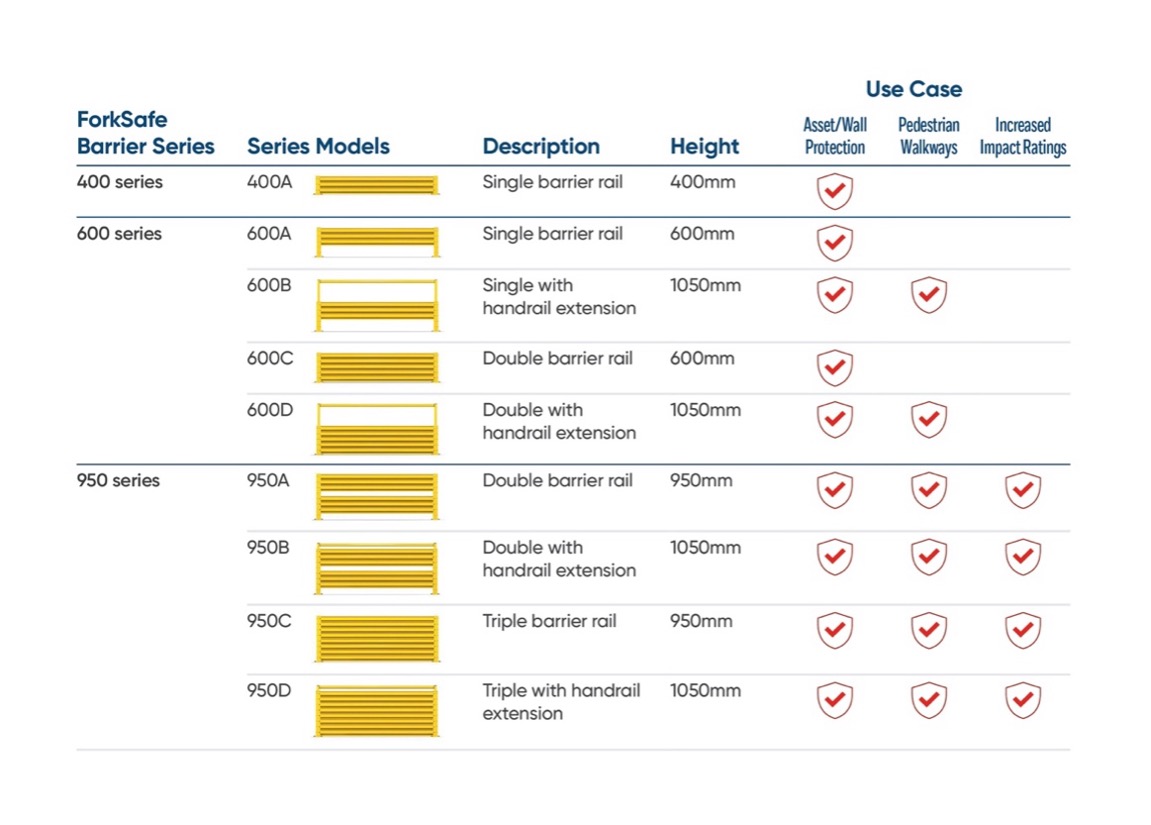
ForkSafe barriers are also impact-tested in accordance with the PAS 13 code of practice, which takes into account the environment the barriers are installed in. PAS 13 is superior in the sense that it creates a rating based on physical impact from forklifts and other MHE, while other codes of practice, including Finite Element Analysis (FEA) or AS/NZS 1170.1, are only designed to test against vehicle impact.
Read More: PAS 13 Steel Barrier Testing: What It Is and Why It Matters
If you want to learn more about our ForkSafe range, check out the article link below, or get in touch, and we’ll work with you to find the right solution for what you are trying to achieve.
Read: A Comprehensive Overview of the ForkSafe Barrier Range
Steel Barriers vs Flexible Barriers: Product and Price
Steel barriers are an entirely suitable protective solution for people and assets in an environment where pedestrians, forklifts and other MHE are active. Plus, they are typically 25-50% cheaper than flexible barriers
Flexible barriers are a more expensive option because they’re made of energy-absorbing materials and have an advanced structure. If you know your barrier will be taking regular hits in high-traffic areas, a flexible barrier may be a better solution in terms of long-term value for money and maintenance.
Read More: Steel vs Flexible Barriers (Differences, Benefits & More)
How Do I Know Which Barrier Is Right for Me?
Deciding which barrier solution is right for your workplace will depend on:
- The size of the space
- The types of vehicles moving through it
- The volume of traffic
- Where and when vehicles intersect with pedestrians
Investing in barriers as a safety solution involves budgeting, planning, and expense. However, the benefits they offer in terms of protecting people and assets are truly invaluable. Now that you have a better understanding of the cost of steel barriers and the factors that influence that final price, you’ll be more equipped to make an informed decision about which solution is right for you and your workplace.
Read More: How Lineage Upgraded Their Traffic Management Controls to Create a Safer Workplace
At Vanguard, we’ve helped make thousands of workplace situations safer, and steel barriers are a solution that has enabled us to help our clients do just that.
If you need help with the selection process or have a specific project at your Workplace that requires guidance, watch our 5-Step Safety Design Process video to see how we can assist, or contact us to discuss your situation.

