
Are you tired of having to replace cones daily on your site, dealing with public complaints, and wasting budget on constant maintenance?
Road cones have traditionally been the go-to delineation device during road maintenance; however, the perceived overuse of cones on projects has led to rising public angst and disregard for Temporary Traffic Management (TTM) worksites.
The NZ Transport Agency, Waka Kotahi, has adopted a new risk-based approach, known as the New Zealand Guide to Temporary Traffic Management (NZGTTM), which will replace the previous prescriptive Code of Practice for Temporary Traffic Management (CoPTTM).
The NZGTTM acknowledges that cones may not always be the most effective solution for managing traffic on your site. Alternative TTM systems, such as flexi posts (also known as delineators or hit sticks) or traffic separators, may be more suitable for your specific situation.
In this article, we’ll explore:
- The Difference Between CoPTTM and NZGTTM
- Understanding the Role of Lane Separation in Risk-Based TTM
- Cones: Pros, Cons and Cost
- Flexi Posts: Pros, Cons and Cost
- Traffic Separators: Pros, Cons and Cost
- Choosing the Right TTM System for Your Site
By the end, you’ll know exactly which TTM device meets your site’s needs based on risk, duration, and budget.
The Shift From “Cones by Default” to Risk-Based Solutions
If you’ve driven New Zealand roads for many years, you won’t be shocked to come across rows and rows of road cones on sites where road maintenance is being carried out. While cones still have their place, if they’re not used correctly based on site needs, they can cause disruption, inefficiency, and create unnecessary maintenance costs.
In a newsletter published by the Temporary Traffic Management Industry Steering Group (TTM-ISG), the public’s frustration with road cones was what led to the launch of WorkSafe’s road cone hotline. The steering group said that, although a few genuine overuse cases exist, most cones are justified for safety and compliance.
However, with the shift from a prescriptive set of rules for TTM (CoPTTM) to a risk-based approach (NZGTTM), those responsible for managing traffic are being empowered to tailor solutions to their specific situation, rather than always resorting to cones for TTM.
Lane Separation Keeps People Safe During TTM
Lane separation devices are used to guide traffic safely and efficiently around road maintenance projects. When used correctly for the site’s needs, they help manage the risk of vehicles encroaching on areas where siteworks are taking place and provide drivers with clear guidance through your worksite.
These devices vary in terms of visibility, level of physical deterrence, maintenance needs, and suitability, depending on the site layout and the volume of traffic travelling through the area. An important point to note is that the safest, most effective choice is not always the cheapest upfront; however, it may produce significant long-term cost savings by reducing maintenance frequency.
3 Top TTM Devices: An Honest Comparison
There are various types of lane separation and delineation tools available, and each one has its purpose when it comes to lane separation in risk-based TTM. Determining which lane separator system is best suited for your site can be a challenging decision.
Contractors and traffic planners often ask us about the differences between various lane separator systems, particularly when it comes to cones, flexible posts and traffic separators. The table below outlines the pros and cons of each system, the time duration for which they’re suitable, and approximate pricing. When reviewing the table, consider hidden costs, such as labour hours and maintenance expenses. Although some systems have a higher upfront cost, they can be more cost-effective in the long term.
At a glance:
- Cones: Quick and Cheap, but High Maintenance
- Flexi Posts/Delineators/Safe Hits: Semi-permanent Visual Boundaries
- Traffic Separators: Physical Separation With Reduced Maintenance
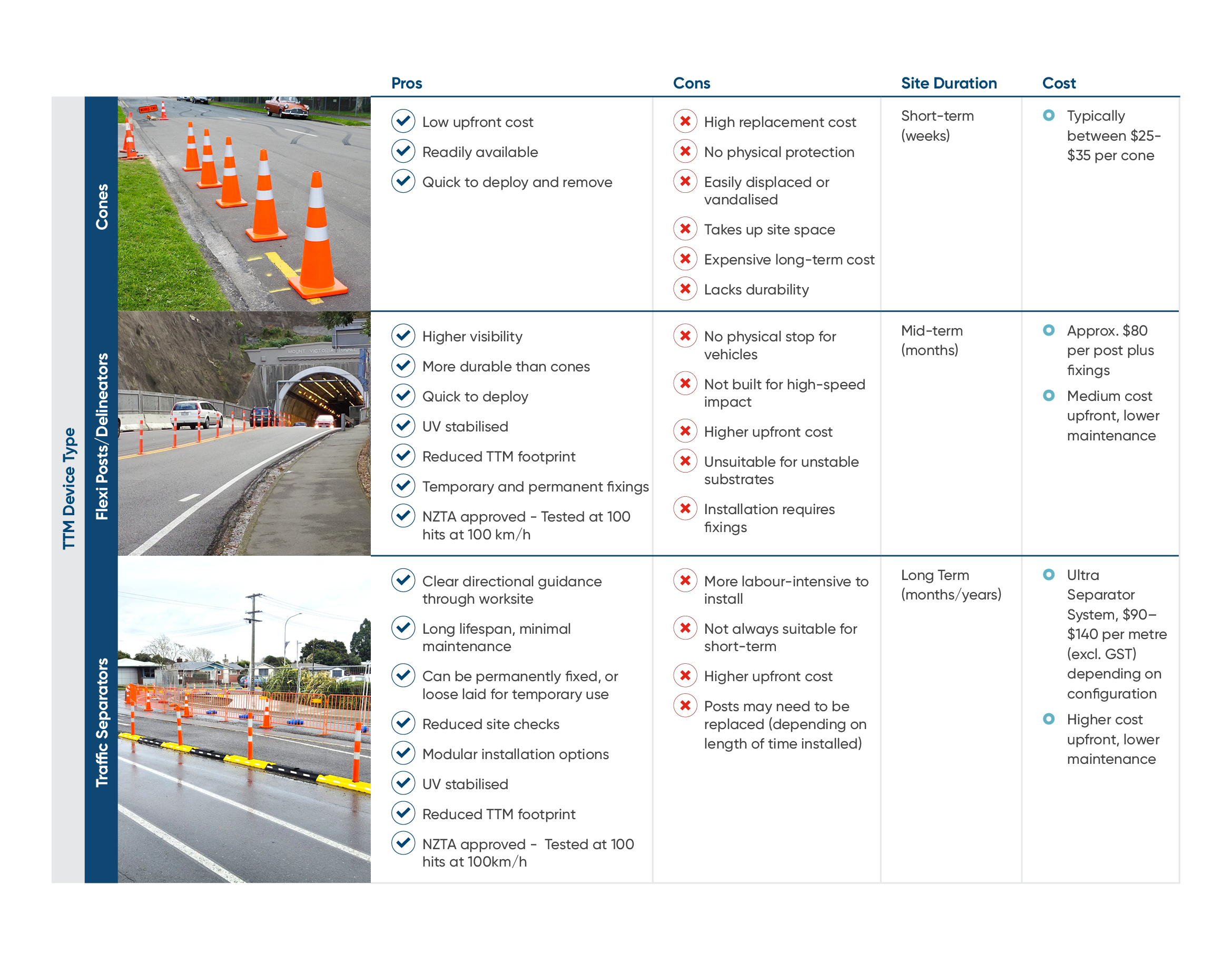
TTM Device Comparison Table
Choosing the Right TTM System for Your Site Duration
The ideal TTM device for your site is one that efficiently manages the identified risks, takes into account the traffic volume, and considers the project duration.
- Short-term works (1–2 days/weeks): Cones make sense — fast, cheap, flexible.
- Medium-term works (months): Flexi posts/delineators reduce maintenance while keeping costs manageable.
- Long-term works (months/years): Traffic separators offer the lowest total cost when factoring in reduced maintenance, labour costs, and exposure risk.
Safety, Efficiency, and Smart Planning Go Together
With the new NZGTTM risk-based approach to TTM, it’s crucial to choose devices that manage and control the risks on your site, the volume of traffic flowing through it, and the duration for which you will need those solutions in place. Every site is different, which means every site requires careful consideration of the TTM system that is implemented.
While cones are tried and true, they are not the only option for your site and may not be suitable for what you’re trying to achieve. Take into account your site requirements so you can make more informed decisions about TTM devices, whether it’s cones, flexi posts, or traffic separators.
At Vanguard, we’ve spent over 30 years working closely with traffic managers to find the right TTM solutions for their sites. We take the time to understand your situation so we can offer the best solutions based on your project’s duration, risk profile, and the budget you’re working within.
If you’re unsure which lane separation system is the best fit for your next project, get in touch with our team; we can help you weigh your options and supply the equipment you need to deliver safe and efficient projects.