

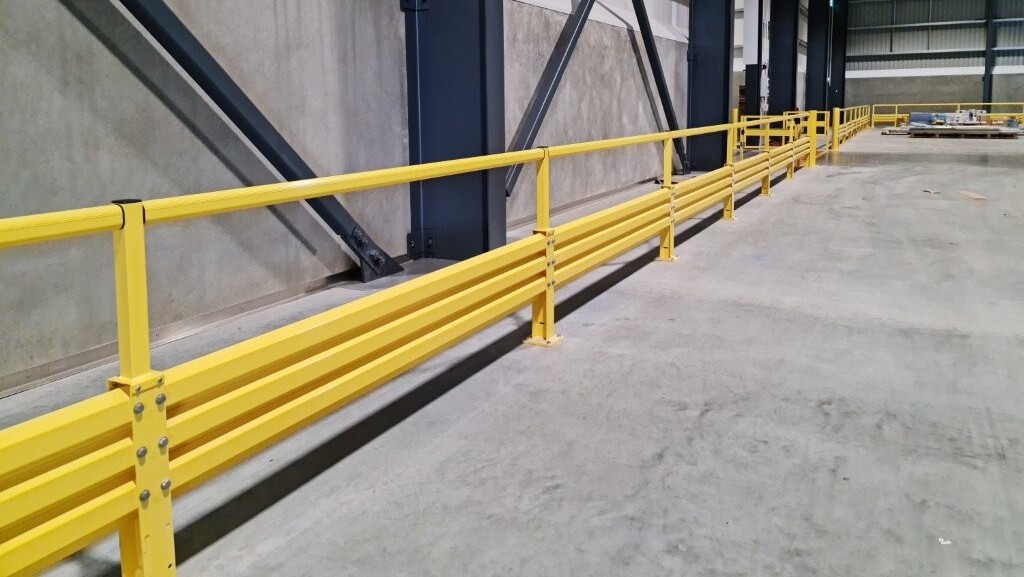
In busy workplace environments where pedestrians and vehicles intersect, protective barriers play a crucial role in safeguarding people and assets.
However, not all barriers are created equal, and even the right barrier can become ineffective if it’s installed incorrectly.
It’s not just about buying a barrier and bolting it into the ground. From the wrong configuration to poor placement, mistakes in barrier installation can create serious safety risks and drive up long-term maintenance costs.
We’re going to explain four common mistakes we’ve seen when it comes to installing protective barriers, and how to avoid them when you come to installing your own.
In this article, we’ll cover:
1. Using the Incorrect Barrier Configuration
2. Putting Barriers in the Wrong Place
3. Installing Barriers into Asphalt
4. Not Checking the Impact Rating
By the time you’re done reading, you’ll have the knowledge to make confident decisions when it comes to investing in the right barriers for your workplace needs.
1. Barrier Basics: Using the Wrong Type of Protective Barrier
Using the incorrect protective barrier configuration for a specific area can increase the risk of damage or injury to people, buildings, forklifts and other materials handling equipment (MHE).
The first thing to consider when deciding which protective barrier is the best option for your site is its intended purpose.
Ask yourself:
• What am I trying to achieve by installing this protective barrier?
• Am I protecting assets from forklifts?
• Am I separating a pedestrian walkway from vehicles?
• Am I stopping storage pallets from falling onto a pedestrian walkway?
Starting with these questions in mind allows you to then select the right type of protective barrier for your situation.
Why Does it Matter?
For example, to create a secure pedestrian walkway, you need a barrier that is the correct height to prevent people from straying outside of it. A 400mm-high protective barrier wouldn’t be suitable in this case because people can easily walk over it. Instead, look for a barrier that is at least 900mm high, or has a handrail extension to stop people climbing over the top, like the ForkSafe 600B or 950A.
The same goes if you want to protect a pedestrian walkway from a stack of pallets; a 900mm protective barrier wouldn’t be tall enough to stop goods from falling over. Instead, a topple barrier would be a more appropriate solution in this situation.
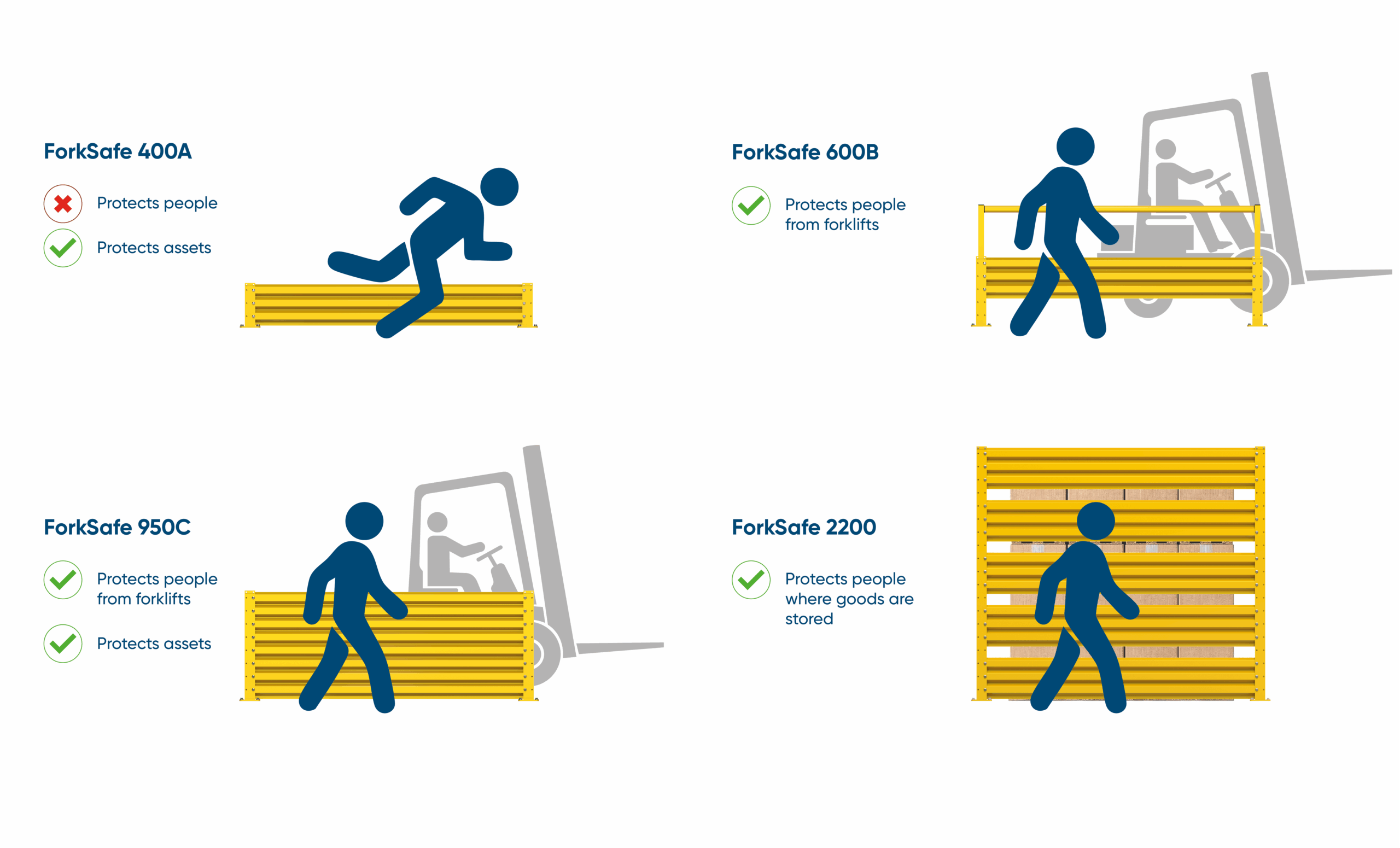
ForkSafe Pedestrian Configuration Comparison
Related Content: The ForkSafe Barrier Range: A Comprehensive Overview
The ForkSafe Barrier System
Our ForkSafe Steel Barrier Range comes in a wide variety of configurations to suit your site safety needs. Check out the table below to explore the different options. If you’re still unsure which barrier is right for your workplace, please get in touch with us, and we’ll be happy to help.

2. Putting The Right Barriers in the Wrong Place
Installing barriers in the wrong place can create significant safety risks to people, while also increasing the likelihood of asset damage and high maintenance costs.
Before installing a protective barrier, consider:
• The type of vehicles travelling through the area
• Where vehicles and pedestrians need access
• Where pedestrians and vehicles are most likely to intersect
• The volume of pedestrian and vehicle traffic flow
• The speed of vehicles travelling through the area
Make sure you also consider how your operations need to function before installing a barrier.
These are big no-nos:
• Placing a permanent barrier in an area where vehicles regularly travel through
• Using a low-height barrier around large trucks
• Installing a pedestrian barrier that isn’t impact-rated for the vehicles using that space will only create high risks and bigger problems.
To avoid installing a protective barrier in the wrong place, it’s crucial to engage key stakeholders in the decision-making process, including operations and health and safety. It makes a big difference if everyone isn’t on the same page up front to avoid running into problems down the track.
3. Installing Barriers into Asphalt
If you install protective barriers directly into asphalt, the barrier will not withstand impact from vehicles, forklifts or other MHE. In fact, the barrier will lose the value of its impact rating entirely.
For this reason, we strongly advise against installing barriers directly into asphalt.
Asphalt is much less dense than concrete and therefore has much lower holding power for the bolts. When a barrier bolted into asphalt is struck, the fixings will be weak and likely fail. If the bolts fail and pop out, they can cause significant damage to the barrier and the surface beneath it, potentially leading to the barrier ripping right out of the ground.
At Vanguard, we won’t bolt barrier fixings into anything but concrete for this exact reason; it’s a cost-cutting exercise that will inevitably backfire. Barriers should be installed either directly into concrete or, if installing into an area that’s currently asphalt, concrete footings or a continuous concrete plinth must be laid first.
4. Not Checking the Impact Rating
Failing to check the impact rating of a protective barrier before purchasing and installing it can result in costly repairs and pose a serious safety risk to both people and vehicles. The maximum force a barrier will need to withstand is based on the vehicles used within your facility and its layout.
Workplaces rely on barriers that have been tested for their strength and durability. However, standard codes of practice, such as Finite Element Analysis (FEA) or AS/NZS 1170.01, aren’t designed to test products in environments where forklifts and other materials handling equipment (MHE) pose the most risk.
On the other hand, there’s PAS 13—a globally recognised code of practice designed explicitly for industrial safety barriers and the risks surrounding them. PAS13 offers the most accurate and reliable guidance for optimising safety and improving traffic management systems for maximum protection in workplace environments.
To learn more about PAS13, check out our article where we cover everything you need to know about this innovative impact testing method.
Regardless of which supplier you choose whether it’s us or someone else, ensure that they can show you the impact ratings and the standards to which the barrier has been tested. Buying a barrier without impact ratings is like buying a car that hasn’t undergone safety testing—you simply wouldn’t do it.
Putting Knowledge into Practice in Your Workplace
Incorrect protective barrier installation doesn’t just create inefficiencies—it can put people, equipment, and operations at real risk. From using the wrong configuration to overlooking impact ratings, these mistakes often lead to higher costs and unnecessary hazards.
Now that you know what to avoid, the next step is ensuring your site has barriers that are fit for purpose and installed to standard. If you’re unsure which barriers are right for your site, or have any other questions that haven’t been answered, get in touch with our team so we can find the right solution for your situation.
