

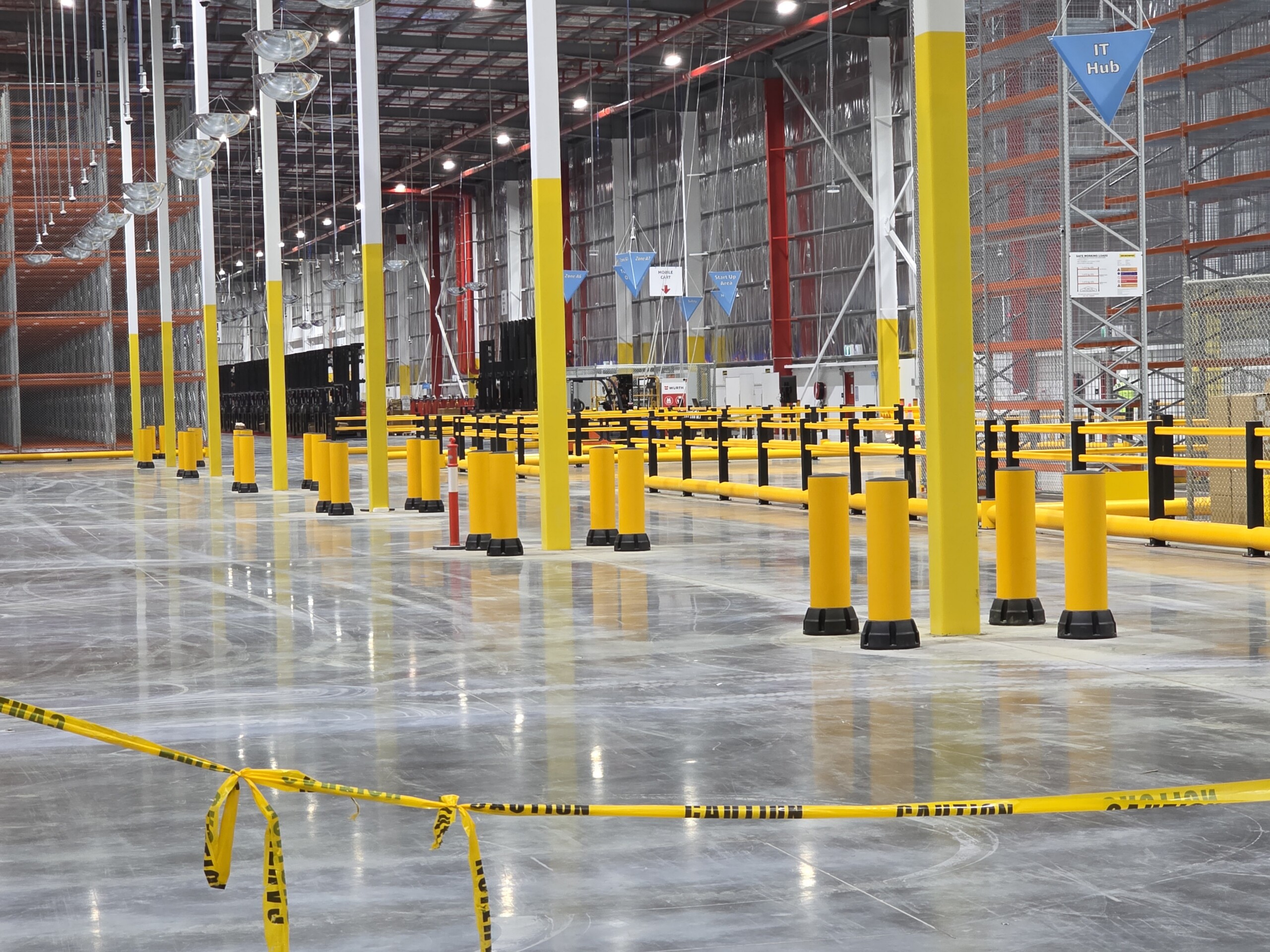
In fast-paced workplaces where vehicles and forklifts are constantly on the move, safety bollards being struck and torn out of the ground is an all-too-familiar problem.
When an impact occurs, the fallout extends well beyond simply replacing a damaged post.
In many cases, you’re faced with repairing ripped-up concrete, sourcing and installing a replacement bollard, and managing the operational downtime that comes with it. It’s a process that’s expensive, disruptive, and entirely avoidable.
How do you prevent this chain of events before it starts? It comes down to one key principle:
You should only ever install purpose-built bollards that match the level of risk in the area and can withstand the types of vehicles, operating conditions, and travel speeds in your environment.
If your site is home to heavy traffic flow, and the risk of impact is high, a standard steel bollard simply isn’t engineered for the task. You need a solution that absorbs energy, minimises damage, and stays firmly anchored on impact.
In this article, we cover:
- What Do Bollards Protect?
- Standard Steel vs Energy Absorbing Bollards
- What’s the Price Difference?
- Which Bollard Is Right for My Site?
Understanding why standard steel bollards may not be the right choice for your site is essential, while being aware of energy-absorbing alternatives will give you the confidence to make the best choice for protecting your people and assets.
What Do Bollards Protect?
Warehouses, plants, packhouses, manufacturing facilities, and distribution centres all house expensive equipment you want to avoid damaging. Whether you’re using a bollard to control access points, prevent impact damage, or separate pedestrians from vehicles, they’re a practical safety solution for busy work sites and public spaces across the board.
Critical infrastructure they protect:
- Electric vehicle charging stations
- Fuel stops (including heavy truck stops)
- Power stations
- Structural beams
- Retail stores
- Fences
- Door frames
- Robotic equipment
- Overhead gantry crane frames
Standard Steel vs Energy-Absorbing Bollards
When deciding whether to install a standard steel bollard or an energy-absorbing bollard on your site, there are several fundamental factors to consider before making a decision.
These include:
- Risk level: What are you protecting? People, assets, traffic flow?
- Environment: Indoors vs outdoors, weather, corrosion.
- Traffic types and speeds: Pedestrian zones, forklifts, or heavy trucks.
- Impact testing: A vehicle’s weight, speed, and impact angle determine a bollard’s ability to withstand impact.
- Maintenance and lifespan: Whole-of-life cost—upfront cost vs maintenance/ongoing costs and operational downtime.
Where Would You Use a Standard Steel Bollard?
In an environment where the risk of a bollard getting hit is low, a standard (non-energy-absorbing) steel bollard will offer enough protection. However, in a high-risk environment, standard steel bollards can be ripped out of the ground following heavy impact. Not only will you have to replace standard steel bollards regularly, but you’ll also have to repair damaged concrete and take on operational downtime, which is expensive and inconvenient—especially in refrigerated or freezer environments such as coolstores.
Where Would You Use an Energy-Absorbing Bollard?
Energy-absorbing bollards are most effective in areas where critical assets need protection, space is tight, and there’s frequent movement of vehicles, forklifts, and other material handling equipment (MHE). Ultimately, they work most effectively and offer the best cost-benefit ratio when installed in locations where they are highly likely to be hit.
Energy-absorbing bollards are particularly effective in refrigerated or freezer environments, such as cool stores. This is because replacing a bollard that has ripped out of the ground in a cool store presents unique challenges, such as waiting for the concrete to cure. When your bollard is less likely to rip out of the concrete, you save significant time and costs by avoiding replacement fees and operational downtime.
If you know you need an energy absorbing bollard but are unsure of your options, we’ve put together a comparison guide to help you decide between Boplan vs. SlowStop energy absorbing bollards— Check it out HERE.
Which Bollard Offers the Most Protection?
Steel bollards are generally not impact-rated, meaning they are not tested to determine what level of impact they can withstand.
On the other hand, energy-absorbing bollards undergo comprehensive impact testing.
An impact rating is measured in joules (kinetic energy/kJ). It is calculated based on the vehicle’s mass (in kilograms), speed (in kilometres per hour), and the impact angle (in degrees).
Use this table to see how the impact rating (kJ) of an energy-absorbing bollard translates to real-world vehicle mass and speed.

By following this guide, you’ll have assurance that the bollard you choose is suitable for the types of vehicles operating in the area you install it in, and the speed they’re travelling.
What’s the Price Difference?
Energy-absorbing bollards come with a higher upfront cost than standard steel bollards. This is due to their energy-absorbing technology and ability to withstand heavy impact.
However, the greater initial investment is guaranteed to save you money in the long term. Why? Because you don’t have to constantly spend money replacing the bollard or the concrete beneath it when it gets hit.
- Standard Steel Bollard Price Range: $185-$595 (depending on model size)
- Energy-Absorbing Bollard Price Range: $733-$2550 (depending on model and size)
For an accurate quote, get in touch with our team, who can help confirm the appropriate specification and provide a detailed quote.
Standard Steel vs Energy-Absorbing Bollards: A Comprehensive Comparison
The table below outlines the key differences between standard steel and energy-absorbing bollards.

Related: “Everything You Need to Know About the World’s Only Full-Steel Rebounding Bollards”
Related: “Boplan vs Slowstop Energy Absorbing Bollards: What’s the Difference?”
How to Install Different Bollards
All bollards must be installed in concrete to reduce the risk of them being ripped out of the ground when hit. You should not install bollards into asphalt or any other surface.
Energy-absorbing bollards are surface-mounted only, while standard steel bollards can be surface-mounted or in-ground installed. If you’re installing a bollard in an area without an existing concrete slab, you’ll need to pour a concrete footing to mount it to, or a concrete plinth if you are installing an entire run of bollards.
Related Content: “Ready to Install Safety Barriers & Bollards? Prep Your Site in 10 Steps.”
Related Content: “The Ultimate Bollard Guide: Surface Mount, In-Ground, Steel or Flexible?”
Which Bollard Is Right for My Site?
When it comes to protecting people, infrastructure, and equipment, the real risk isn’t just the impact itself; it’s choosing a bollard that isn’t designed to withstand that impact.
Standard steel bollards have their place in low-risk areas, or as a cost-effective solution, but in busy industrial environments where impacts are likely, energy-absorbing bollards are the smarter, safer long-term option. They reduce damage, protect concrete, and help you avoid the ongoing cost and disruption of replacements and repairs.
Making the correct choice comes down to your site’s risk profile: vehicle types, speeds, operating conditions, and what you’re protecting. If you match the bollard to the real-world hazards on your site, you can’t go wrong.
If you’re looking for more support in deciding which bollard is right for your site, get in touch with our team so we can understand your situation and help you protect your people and assets.
